The best paper towel alternative depends on the mess and the surface. A cloth that handles a quick counter wipe might not be the right choice for greasy spills, glass, or a wet sink.
Paper towels are convenient, but running out mid-cleanup is frustrating, and tossing used sheets adds recurring waste. Switching to reusable cloths can seem simple until you consider which kind suits each job, how to care for it, and where to put used cloths between washes.
This guide compares practical paper towel alternatives, including reusable cloths and other options. We’ll look at absorbency, convenience, cleaning uses, and upkeep, then walk through a simple routine for collecting, washing, and storing reusable cloths. We’ll also cover when disposable options may still make sense. There’s no one-size-fits-all answer, just clear trade-offs to help you choose a setup that works for your home.
Key Takeaways
- A paper towel alternative can be reusable or disposable. The right choice depends on the mess and the routine you can maintain.
- Compare cloths, sponges, cotton rags, and paper options by their likely uses, reuse potential, cleanup, and limitations.
- Match your choice to the task, from everyday spills and counters to dusting and delicate or reflective surfaces.
- Make the switch gradually by testing reusable options on a few routine jobs before changing your whole setup.
- Explore Streak Free XL’s Streakfree towels, Magic cleaning cloths, Zap cloth, Ultimate cleaning cloth, and Holy moly cloth as options to evaluate.
What Makes a Practical Paper Towel Alternative?
A paper towel alternative is a product used instead of a disposable paper towel for household cleanup. It might be a washable cloth you use again or another disposable paper-based option for a particular job. The goal isn’t to find one perfect replacement for every home. It’s to choose something that suits the mess, the surface, and the amount of care you’re willing to take on.
That distinction matters. A general-purpose cloth can be handy for routine wiping, while a tool intended for a specific surface may be a better fit for that task. Convenience counts, too. Reusable supplies need a place to dry and wait for washing, while disposable options can be tossed after use. For background on paper towels and their production, see this overview of environmental issues with paper towels.
What Counts as a Paper Towel Alternative?
Washable cleaning cloths are a common reusable choice. Use one for household wiping, then launder it before using it again. Cotton rags and microfiber cloths are two examples, though the right cloth depends on what you’re cleaning and any care instructions that come with it.
Alternatives can also be disposable. Some households keep paper napkins or another paper-based product on hand for occasional use. These can stand in for paper towels in certain situations, but they don’t create the same reusable routine. And not every cleaning tool is a direct substitute: a sponge, for instance, may suit a particular kitchen task better than wiping a surface with a cloth.
Why Replace Paper Towels at Home?
Running out at the wrong moment is a familiar hassle. Some households look for a paper towel alternative to reduce their use of disposable sheets or keep washable supplies ready for everyday cleanup. The trade-off is simple: reusable cloths need to be gathered, washed, and stored so a clean one is available when you need it.
That care routine won’t suit everyone, and it doesn’t have to replace every paper towel. Disposable towels may still be convenient for occasional, especially messy jobs. Think about what you wipe most often, where you can keep clean and used cloths, and how willing you are to add laundry to the routine. Start with the option that makes those everyday jobs feel easier, not harder.
Paper Towel Alternatives Compared: Reusable Cloths, Sponges, and Disposable Options
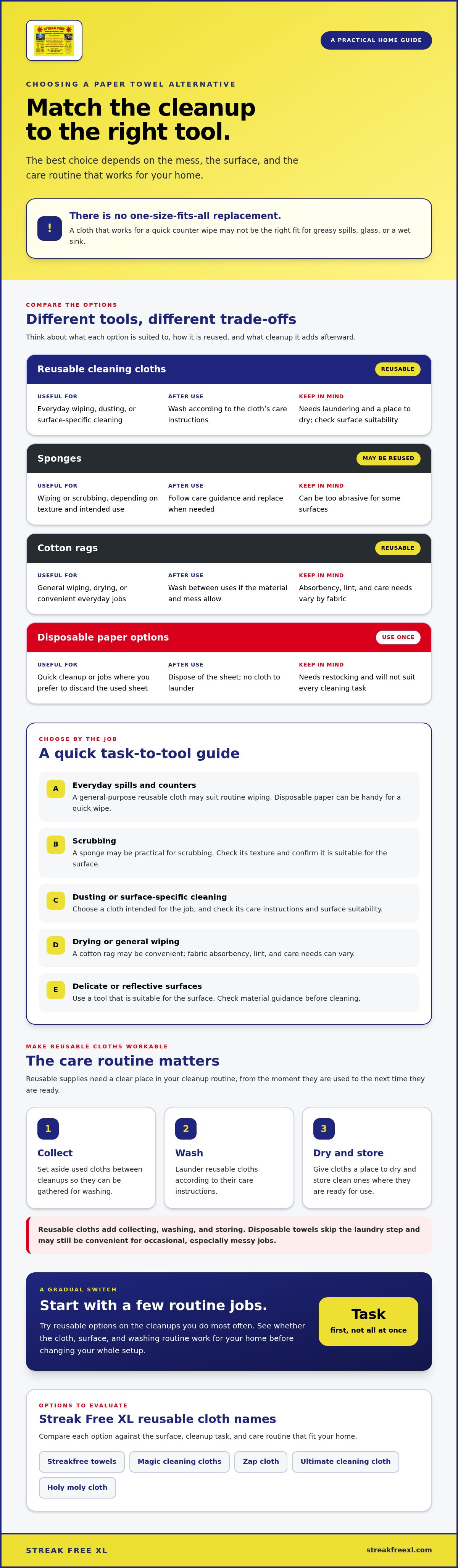
There’s no single winner for every cleanup. A reusable cloth may suit routine wiping, a sponge can be more practical for scrubbing, and a disposable sheet may be handy for a one-off mess. Compare each option by the job it handles, whether you’ll reuse it, and what cleanup it adds afterward. The U.S. Environmental Protection Agency offers broader guidance on the environmental impact of cleaning products, a useful lens when weighing household choices.
| Option | Likely uses | Reuse and cleanup | Practical limits |
|---|---|---|---|
| Reusable cleaning cloths | Everyday wiping, dusting, or surface-specific cleaning, depending on the cloth | Use again after washing according to its care instructions | Needs laundering and a place to dry; check whether it suits the surface |
| Sponges | Wiping or scrubbing, depending on the sponge’s texture and intended use | May be reused; follow care guidance and replace when needed | Can be too abrasive for some surfaces, so check surface guidance |
| Cotton rags | General wiping, drying, or jobs where an old cloth is convenient | Wash between uses if the material and mess allow | Absorbency, lint, and care needs can vary by fabric |
| Disposable paper options | Quick cleanup or jobs where you prefer to discard the used sheet | Use once, then dispose of it | Must be restocked and won’t suit every cleaning task |
Reusable Cleaning Cloths Versus Paper Towels
A washable cloth is ready for another round after cleaning, but reuse adds a step that paper towels skip: collecting and washing it. Disposable paper is straightforward for a quick wipe, especially when you don’t want another item in the laundry. A cloth’s suitability depends on its intended use and care directions. Check both before using one on a delicate finish or a surface that needs special handling.
How Sponges, Cotton Rags, and Other Options Differ
These choices aren’t interchangeable. A sponge’s shape or texture may make it useful for scrubbing. A cotton rag may work for drying or general wiping, while a disposable sheet is convenient when you’d rather not wash a cloth. Read material-specific care advice and confirm that a tool is suitable for the surface. The practical choice depends on the task you’re tackling and the care routine you’ll actually follow.
If you’re considering a reusable cloth for regular household cleaning, explore Streak Free XL cleaning textiles and check each product’s details before choosing one for a particular job.
Which Paper Towel Alternative Works Best for Each Cleaning Task?
Start with the surface and the mess, not a universal “best” cloth. The right paper towel alternative for a small drink spill may not be the right tool for dusty shelves or a reflective finish. Check the intended use and care instructions, then match your choice to the job.
Choosing a Cloth for Counters, Spills, and Everyday Wiping
For an everyday spill, reach for a clean cloth that’s suitable for the surface and has the absorbency you need. A disposable sheet can be convenient for a quick, one-off mess, while a reusable cloth needs washing before its next use. For counters, check the surface-care advice, especially if the material has a special finish. Don’t assume one cloth suits every countertop.
A simple separation system can make the routine easier. Keep cloths for food-preparation areas apart from those used for other household wiping. Set used cloths aside for washing instead of mixing them with clean ones. If you are stocking up on bins or home essentials to keep your cleaning supplies organized, online shops such as Apollo store offer a wide range of practical household goods.
- Kitchen counters: Choose a clean wiping cloth that’s appropriate for the counter material. Follow the surface’s care guidance.
- Everyday spills: Use a suitable reusable cloth if you’re ready to wash it, or a disposable option when tossing the used sheet is more convenient.
- General dusting: Pick a cloth intended for dusting and check its instructions. A damp cloth may not be right for every surface or finish.
Choosing an Option for Glass and Delicate Surfaces
Glass, mirrors, and delicate finishes call for a careful choice. Look for cloth guidance that specifically covers the surface, and follow the manufacturer’s cleaning and care instructions. A cloth that works for a counter shouldn’t automatically be used on glass or a sensitive finish. Avoid rough materials or scrubbing unless the surface-care guidance says they’re suitable.
Car windows have their own considerations, so separate general household wiping advice from glass-specific instructions. If you’re choosing a cloth for that job, read the streak-free car window cloth guide for focused guidance. A task-first approach keeps your setup practical: one option for routine wiping, another where the surface calls for specific care.
How to Switch from Paper Towels Without Making Cleaning Harder
You don’t need to change your whole cleaning routine overnight. A gradual switch lets you see which reusable option fits your household before you rely on it for more tasks. Start with a repeatable job, keep the cloth easy to reach, and retain a disposable backup for messes where you prefer one.
A Simple Step-by-Step Transition Plan
- Notice where paper towels go. For a few days, pay attention to the tasks you reach for them to handle. Is it quick counter wipes, small spills, or something else? This shows you where a trial is most likely to fit.
- Pick one routine task. Try a suitable reusable cloth for a job you do often, such as wiping a counter. Check that the cloth is intended for that surface, then see whether it’s convenient to use, set aside, and wash.
- Adjust before adding more. If the cloth is often unavailable because it’s in the laundry or still drying, add another clean one or choose a different task to test. Keep disposable towels for jobs where your household prefers them.
- Expand at your pace. Once the first task feels manageable, try another. A paper towel alternative should make your routine workable, not leave you scrambling for a clean cloth.
Washing, Drying, and Storing Reusable Cloths
A simple system helps reusable cloths stay in rotation. Set aside a spot for used cloths, separate from clean ones, and launder them according to the care label or product instructions. Washing and drying directions vary by material, so don’t assume every cloth belongs in the same load or can be cared for the same way. Check product-specific guidance before settling on a routine.
Keep the system easy to follow: clean cloths should be ready to grab, and used ones should have a designated place until laundry day. If a cloth has handled a particularly messy job, follow its care instructions before using it again. Routine household wiping is different from situations that call for specific sanitation procedures. Follow relevant product and surface directions rather than assuming an ordinary wash meets every need.
Looking for a reusable cloth to test in your routine? Explore Streak Free XL cleaning cloths and review the product details and care instructions before choosing one for a task.
Explore Reusable Paper Towel Alternatives from Streak Free XL
You’ve compared the options and considered which jobs you’d like to handle with reusable cloths. Before choosing, check what a cloth is intended for, how it should be cared for, and whether that routine works in your home.
What to Check Before Choosing a Reusable Cleaning Cloth
Start with the task. A cloth for general household wiping may not be intended for every surface, so read the product guidance before using it on glass, delicate finishes, or other materials that need special care. Surface instructions matter, too. If they recommend a particular cleaning approach, make sure the cloth you choose is suitable for it.
Next, consider what happens after cleaning. Reusable cloths need to be stored apart from clean ones until laundering, then washed and dried according to their specific care instructions. If you don’t have a convenient place to keep used cloths or fit them into your laundry routine, start with one task and see how it goes. Practical beats ambitious. A paper towel alternative only fits your routine if you can keep it clean, ready, and appropriate for the job.
Find a Cleaning Cloth That Fits Your Routine
Streak Free XL offers several cleaning textiles to consider: Streakfree towels, Magic cleaning cloths, Zap cloth, Ultimate cleaning cloth, and Holy moly cloth. These are options to evaluate, not a one-size-fits-all recommendation. Review the product information for each, including its intended use and care guidance, before choosing one for a household task.
Keep your decision simple. Think about the surface you clean, how often you’ll use the cloth, and whether washing and storing it feels manageable. If you’re replacing paper towels for a particular job, choose based on that job’s requirements rather than assuming one cloth will work everywhere. If you’re not ready to change your entire routine, test a reusable option on one regular task first.
Ready to compare the available options? Explore cleaning cloths from Streak Free XL and check the product details to find a fit for your household cleaning routine.
Make the Switch One Cleaning Task at a Time
The right paper towel alternative depends on what you’re cleaning and the routine you can keep up with. Reusable cloths can suit everyday jobs when you’re comfortable separating, washing, and storing them. Sponges, rags, and disposable options may still have a place for tasks where they’re a better fit. You don’t need to replace everything at once. Start with one regular job, then adjust based on what feels convenient.
Streak Free XL, established in 2008, offers Streakfree towels, Magic cleaning cloths, the Zap cloth, the Ultimate cleaning cloth, and the Holy moly cloth. Its cleaning textiles are designed for surface cleaning without requiring chemical cleaning solutions. Check product details and care instructions to see which option suits your household tasks.
Explore reusable cleaning cloths from Streak Free XL and choose a practical next step for your routine. Start with one task and build a setup that works for your home.
Frequently Asked Questions
What is the best alternative to paper towels?
There is no single best paper towel alternative for every household. Reusable cleaning cloths can work well for repeated everyday wiping if washing and storing them fits your routine. Sponges, cotton rags, and disposable paper options may suit other jobs. Before choosing, consider the surface, mess, convenience, and care instructions. Try one option for a regular task first, then decide whether it makes cleanup easier.
Are reusable cloths better than paper towels?
Reusable cloths can be a practical choice if you want to reuse a cleaning textile and don’t mind laundering it. Paper towels may still be more convenient for quick or messy jobs. Which works better depends on the task, your household habits, and the care instructions for the cloth. Don’t assume every cloth suits every surface or that one option is automatically right for every home.
Can I use a cleaning cloth instead of paper towels for everything?
Not necessarily. A cloth may suit routine wiping, while a sponge or disposable option may be more convenient for a particular mess or surface. Check the cloth’s instructions and the surface-care guidance before use. If you’re unsure whether the cloth is suitable, test it on a small, inconspicuous area first. Keep cloths for different cleaning tasks separate so they aren’t used indiscriminately around the home.
How do you wash reusable cleaning cloths?
Follow the care label or manufacturer’s instructions for the specific cloth. Keep used cloths separate from clean ones until laundering, then dry them as directed before storing. Care needs vary by material and product, so don’t assume one washing routine fits every cloth. Check product guidance before using bleach, fabric softener, or unusually hot water. If instructions aren’t clear, check with the manufacturer before choosing a care method.
Are paper towel alternatives sanitary?
Reusable cloths can be part of a household cleaning routine when they’re used for suitable tasks and cared for according to their instructions. Keep used cloths apart from clean ones, launder them as directed, and avoid using the same cloth across unrelated areas. For food-related or higher-risk cleanup, follow relevant public-health guidance. General advice about cloth care isn’t a substitute for specific sanitation directions for a particular situation.
What can I use instead of paper towels to clean glass?
Choose a clean cloth that’s suitable for glass, and follow its product instructions. Check the glass or window manufacturer’s care guidance too, especially if the surface has special requirements. A general-purpose cloth may not be suitable for every finish. For vehicle glass, look for advice specifically about car-window cleaning rather than assuming household glass guidance applies. If uncertain, test a suitable cloth on a small, inconspicuous area first.