A plush cloth isn’t automatically the best choice for your car windows. If the glass still looks hazy after cleaning, the cause may be lint, trapped dirt, residue, or the way you’re wiping. Choosing a streak free car window cloth is less about a bold product claim and more about finding a cloth that’s clean, easy to control, and suitable for glass.
It’s frustrating to put in the effort, only to spot streaks when the light hits the windshield. The right cloth can help, but its condition and your technique matter too. A cloth that has picked up grime or residue can undo a careful clean.
This guide explains what to compare, how to check for lint and dirt, and how care and wiping technique affect the finish. Use these practical checks to choose a cloth and build a repeatable routine, without relying on guesswork or assuming a product name guarantees a clear result.
Key Takeaways
- Choose a streak free car window cloth by checking its texture, lint, condition, and how comfortably you can handle it.
- A dedicated glass cloth can make your routine easier to manage, but a clean cloth and careful technique still matter.
- Follow the cloth’s care label and check it before use to reduce the chance of transferring dirt or residue to the glass.
- Compare your needs with options such as Streak Free XL, and check the product details before using a specific cloth on automotive glass.
What makes a streak free car window cloth different?
A streak free car window cloth is one that helps you wipe glass without leaving obvious marks, haze, or loose fibers. That’s the goal, not a result guaranteed by the cloth alone. What’s on the glass, whether the cloth is clean, and how you use it all affect the finish.
Microfiber is a common material for cleaning textiles. Its fibers are made from materials such as polyester and polyamide; read more about what microfiber is and how it’s used. But a fabric label by itself won’t tell you how a particular cloth will perform on your car windows. Check the stated use and the cloth’s condition, then assess the result on your own glass.
Why car windows show streaks, haze, or lint
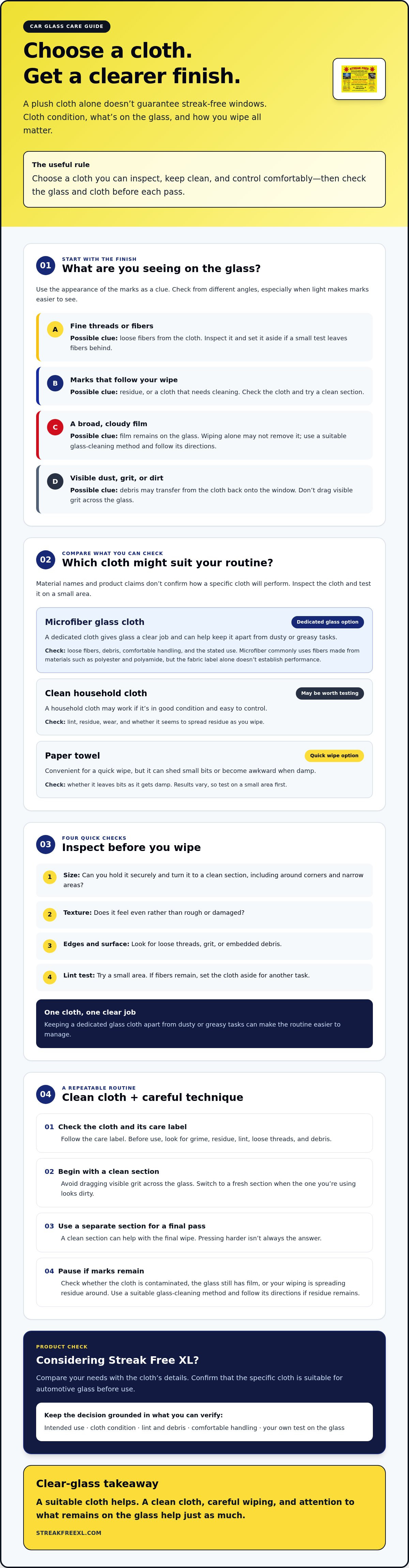
A thin layer of residue can remain after wiping, making glass look cloudy or streaked, especially in bright light. Dust or dirt trapped in a cloth can transfer back to the window. Loose fibers may appear as fine threads, while streaks often follow the direction of your wipe. Haze usually looks more like a broad, cloudy film.
Use those clues to troubleshoot instead of repeatedly buffing the same spot. If you see fibers, inspect the cloth. If marks appear in wipe-shaped lines, check for residue or a cloth that needs cleaning. If the whole window looks hazy, there may still be a film on the glass that wiping alone hasn’t removed. Check from different angles to see what remains.
What a car window cloth can, and cannot, do
A cloth can help lift, spread, and wipe away what’s on the glass. A separate clean section can also help with a final pass. But don’t assume a cloth will remove every kind of film on its own. If residue remains, use a suitable glass-cleaning method and follow its directions. Pressing harder isn’t always the answer.
Technique matters. Start with a clean cloth, avoid dragging visible grit across the surface, and switch to a fresh section when the one you’re using looks dirty. If the finish still disappoints, pause and identify the likely cause. The glass may need more cleaning, the cloth may be contaminated, or your wiping may be spreading residue around.
Which cloth features matter most for streak free car windows?
Choose by what you can inspect and test, rather than relying on a label that promises a perfect finish. Microfiber is a popular option for cleaning glass, but the material name alone doesn’t confirm that a particular cloth will suit your windows. For background, explore the science behind how microfiber works, then compare how the cloth feels and performs in use.
Microfiber versus ordinary household cloths for automotive glass
A dedicated glass cloth gives you a clear job for that cloth and makes it easier to keep it apart from dusty or greasy tasks. A clean household cloth may also be worth testing. Check whether it’s easy to control, leaves fibers, or seems to spread residue as you wipe. Paper towels are convenient for a quick wipe, but they can shed small bits or become awkward when damp. Results vary, so test on a small area first.
| Cloth option | Potential benefit | What to check |
|---|---|---|
| Microfiber glass cloth | A dedicated option for wiping glass | Check for loose fibers, debris, and comfortable handling |
| Clean household cloth | May work if it’s in good condition and easy to control | Look for lint, residue, or wear before using it on the window |
| Paper towel | Convenient for a quick wipe | Notice whether it sheds or leaves bits as it gets damp |
How to assess size, texture, edges, and lint
Choose a size you can hold securely and turn to a clean section without struggling, particularly around corners and narrow parts of the glass. The texture should feel even, not rough or damaged. Inspect the edges for loose threads and the surface for grit or embedded debris before wiping. If a small test leaves fibers behind, set the cloth aside for another task.
Quick cloth check: Look at the size, feel the texture, inspect the edges, and test for lint.
Compare those details with the way you clean your car, then consider Streak Free XL cloths as one place to explore cleaning cloth options. Review the details for any cloth you’re considering and confirm it’s suitable for automotive glass before use.
Do you need a special cloth for car windows, or is technique the key?
A specialist cloth can make glass care more consistent, but it can’t guarantee a streak-free result by itself. The label doesn’t tell you whether the cloth is clean, whether there’s residue on the window, or whether your wiping is spreading it around. A suitable cloth helps, and good habits help just as much.
When a dedicated car window cloth is worth considering
A separate glass cloth is useful if your usual cleaning cloth also gets used on dusty dashboards, door sills, or other dirtier surfaces. Reserving one cloth for windows can help prevent grime, lint, or product residue from transferring onto the glass. It also makes your routine easier to manage: you know which cloth to reach for and can check its condition before you start.
That doesn’t mean every driver needs to buy a specialist cloth. If you already have a clean, suitable cloth that works well on glass, try it first. Compare the finish and how easy the cloth is to control. A dedicated option is worth considering if it gives you a cleaner, more repeatable process, not simply because its name sounds specialized.
When cleaning habits are the bigger issue
Before blaming the cloth, inspect it. Soil, visible lint, trapped grit, or detergent residue can all affect the finish. A cloth stored where it could collect dust may need attention before it touches the window. Follow its care label and keep it separate from cloths used for messier jobs.
Then review how you’re wiping. Use controlled, even movements and turn to a clean section as needed. Pressing harder to chase a streak can smear residue and make the task more frustrating. If the mark persists, pause to check whether the cloth is clean and whether the glass needs a suitable cleaning method. More force won’t make up for either.
This isn’t a full windshield-cleaning tutorial. The key is to treat cloth choice and technique as a team. A streak free car window cloth can support a consistent routine, but it can’t compensate for a dirty cloth or unsuitable handling. Keep your glass cloth clean, reserve it for that purpose when practical, and judge it by the finish it helps you achieve.
How to choose and care for a streak-free car window cloth
A good choice isn’t just about how a cloth feels in your hand. Check its intended use, condition, and care requirements before relying on it for automotive glass. Use this checklist to choose a streak free car window cloth with fewer surprises and keep it ready for the next clean.
A quick checklist before buying
- Check the intended use. Is the cloth described for glass, or is it a general-purpose cleaning cloth? If the product information doesn’t mention automotive glass, don’t assume it’s suitable. Look for clear details or check with the seller.
- Consider size and handling. Choose a size you can hold comfortably and turn to a clean section as you work. A cloth that’s awkward to grip or manage can make careful wiping harder.
- Look for care instructions. Clear washing and drying guidance helps you understand what it takes to maintain the cloth. Follow the care label for the specific cloth you buy.
- Read claims closely. Treat listed features as the details you can assess. Don’t assume unlisted qualities, such as a particular weave, lint-free performance, or suitability for every glass surface.
Still comparing options? A commercial-grade cleaning cloth comparison can help put product differences in context. Use the criteria that matter for your own windows instead of choosing based on a broad claim alone.
Keep the cloth clean and ready for the next use
Even a well-chosen cloth can disappoint if it carries dirt or residue. Follow the manufacturer’s washing and drying instructions. If the care label allows, washing it separately from lint-producing items may help limit fibers transferring onto the cloth. Don’t guess at care requirements, since instructions can vary between products.
Once dry, store the cloth somewhere clean, away from dust, grit, and heavily soiled cleaning tools. Before the next use, check it over. If it still looks dirty after washing, has damaged edges, or keeps shedding fibers, set it aside for a less sensitive task or replace it. That way, you’re less likely to transfer debris back to the glass.
Simple care makes your cloth easier to rely on from one clean to the next. If you’re looking for a cleaning cloth option, explore Streak Free XL cloths and check each product’s details to confirm it suits your intended use.
Choosing a Streak Free XL cloth for your car windows
Streak Free XL sells Streakfree towels, which may be worth considering if you’re looking for a consistent glass-cleaning routine. A product name alone doesn’t confirm that a particular towel is intended for automotive windows. Before choosing one as your streak free car window cloth, check the current product information and make sure its stated use matches the surface you plan to clean.
What to check before choosing a Streak Free XL towel
Apply the same practical checks you’d use for any cloth. Look for clear information about intended surfaces, then compare the care guidance with how you prefer to wash and store cleaning cloths. Check product claims against the details provided rather than assuming a towel has a particular fabric, size, weave, or performance based on its name.
- Intended surfaces: Confirm that the product information supports using the towel on automotive glass. If that use isn’t clear, don’t assume.
- Care instructions: Make sure you can follow the washing and drying guidance for that specific towel.
- Practical fit: Consider whether the listed details suit your routine, and inspect the cloth’s condition before using it.
These checks help set realistic expectations. A suitable cloth can support a clean finish, but it doesn’t replace cleaning the glass with an appropriate method. It also can’t compensate for dirt or residue on the cloth itself.
A simple next step for clearer car glass
Once you’ve confirmed that a towel is intended for automotive glass, start with a clean one and try it on a small area. Check the result in good light before using it across the rest of the window. If you notice lint or marks, pause and reassess the cloth and cleaning approach instead of pressing harder.
Choosing carefully gives you a cloth that fits your use and has care instructions you can follow, a more consistent place to start. Explore the Streak Free XL cloth range and review the current product details to see whether a Streakfree towel suits your car-window routine. Check before you choose, then let the result guide your next step.
Choose your cloth and make clearer glass the goal
The right streak free car window cloth suits the glass, is clean and easy to handle, and fits a care routine you can follow. A specialist label alone won’t promise a perfect finish. The cloth’s condition and your wiping technique matter too.
Streak Free XL sells cleaning textiles, including Streakfree towels and Magic cleaning cloths. Before choosing a specific cloth for your car windows, check its current product details for intended surfaces and care instructions.
Ready to compare options? Explore Streak Free XL cloths and see what may fit your cleaning routine. Start with a clean cloth, follow its care guidance, and check the finish as you go. Choose a cloth that suits your needs and use it as directed.
Frequently Asked Questions
What is the best cloth for cleaning car windows without streaks?
Look for a clean cloth intended for glass, with low lint and a texture you can control. Compare product details instead of relying on the label alone. A streak free car window cloth can help with wiping and finishing, but it can’t guarantee clear glass if the cloth is dirty or residue remains on the window. Check the cloth’s condition, use a suitable cleaning approach, and assess the result before repeating the same wipe.
Can I use a regular microfiber cloth on car windows?
A clean microfiber cloth may work on car glass, but cloths can differ in texture, lint, and condition. Check that yours is free from grit and residue, especially if it has been used on dusty or greasy surfaces. If streaks remain, look at the glass and your cleaning method too. The cloth may not be the only cause, so buying another microfiber cloth won’t necessarily solve every haze problem.
Why do my car windows still look streaky after wiping?
Streaks can come from leftover film, residue on the cloth, or wiping that spreads dirt instead of removing it. Inspect both the glass and cloth before repeating the same motion. A visibly dirty cloth may need cleaning, while persistent film may call for a suitable glass-cleaning method. Pressing harder isn’t always the answer. Try a clean section of cloth, then check the window from another angle to see whether the haze has improved.
Should I use separate cloths for car windows and other surfaces?
A separate cloth for glass can help reduce the chance of transferring grease, dust, or grit from other surfaces. It isn’t essential if you have a clean, suitable cloth and manage it carefully, but keeping one reserved for windows can simplify your routine. If you use a cloth for multiple jobs, inspect it before cleaning glass and wash it according to its care instructions. Don’t wipe a window with a visibly soiled section.
How do I wash a car window cleaning cloth?
Follow the care label for the specific cloth, since washing and drying instructions can differ. Remove visible dirt and don’t put the cloth away while it’s damp. If the care instructions allow, washing it separately from lint-producing items may help limit transferred fibers. Don’t guess at detergent, water temperature, or drying method. Check the manufacturer’s directions, then store the cloth dry in a clean place away from dust and grit.
Can a car window cloth clean glass without chemical cleaner?
Some cloths are designed to clean surfaces without requiring a chemical cleaning solution, but results depend on the cloth, the glass, and the residue. A dry cloth or water alone may not remove every mark. Check the product guidance and choose a suitable method for the condition of the window. If residue persists, reassess what’s on the glass rather than assuming the cloth can handle every type of buildup by itself.
How often should I replace a car window cloth?
There’s no universal replacement schedule. Keep using a cloth while it remains clean, intact, and suitable for glass, and follow its care instructions after use. Inspect it for embedded dirt, damaged edges, or persistent shedding. If it still leaves lint or marks after proper care, stop using it on windows or replace it with an appropriate option. The cloth’s condition is a more useful guide than an arbitrary timetable.