One cloth shouldn’t have to do every job. But choosing multi surface cleaning cloths can feel like a guessing game when every label promises something different. Pick a cloth or cleaning method that doesn’t suit the task, and you may end up with lint on glass, smears on a glossy surface, or residue you have to wipe away again.
The answer isn’t finding one miracle cloth. It’s matching the cloth to the task and surface, then caring for it properly so it’s ready to use again. A simple routine can reduce the need to reach for a different cloth for every small job while still keeping separate cloths for tasks where dirt or residue could transfer.
This guide compares common types of reusable cleaning cloths and the features that matter for everyday jobs around the home. You’ll learn how to choose for glass, counters, and other surfaces, how to reduce streaks and lint, and how to wash and store cloths for repeated use. The aim is to make a practical choice based on the job, not just the label.
Key Takeaways
- Choose multi surface cleaning cloths by the job and surface, not by a promise that one cloth can handle everything.
- Compare microfiber, cotton, glass cloths, and reusable sponge cloths by how they wipe, absorb, dry, or polish.
- Check surface guidance and consider the type of soil before choosing a cloth and cleaning method.
- Keep cloths for different tasks separate, then launder them as directed so they’re ready for reuse.
- Build a simple cloth routine around your regular cleaning jobs, balancing versatility with task-specific needs.
What Are Multi-Surface Cleaning Cloths, and What Can They Handle?
A multi-surface cleaning cloth is a reusable textile intended for more than one everyday cleaning task. A task-specific cloth, by contrast, is chosen for a narrower job, such as polishing or cleaning a delicate surface. “Multi-surface” signals flexibility, not a guarantee that the same cloth is right for every material, mess, or finish.
What a cloth can handle depends on its fibers and weave, the surface, the type of soil, and how you use it. Picking up light dust is different from wiping a greasy spill. Fiber construction matters too. Microfiber refers to very fine fibers, commonly made from materials such as polyester and polyamide. The cloth’s construction helps determine how it feels and performs.
What does multi-surface mean on a cleaning cloth?
Think of the label as a starting point for general household wiping, not a universal performance guarantee. A reusable cloth may suit routine jobs such as wiping a table or cleaning an appliance exterior, but that doesn’t automatically make it suitable for polishing a delicate finish. Check the cloth’s care instructions and the surface manufacturer’s guidance. If a surface needs special treatment, choose a cloth and method intended for that job.
Which everyday surfaces are commonly cleaned with reusable cloths?
Reusable cloths are often used on household counters, tables, fixtures, and appliance exteriors. These are common uses, not blanket approval for every material or finish. Protective coatings and manufacturer care instructions can affect what’s appropriate. Check before wiping an unfamiliar or delicate surface, and start with a clean cloth.
Glass can also be part of a cloth’s routine, but the cloth’s lint and finish matter when you want a clear result. For vehicle glass, follow the vehicle manufacturer’s care guidance. Don’t let a broad-use label make the decision for you. Choose for the actual surface and task.
A Roundup of Cleaning Cloth Types: What Each One Is Best Suited For
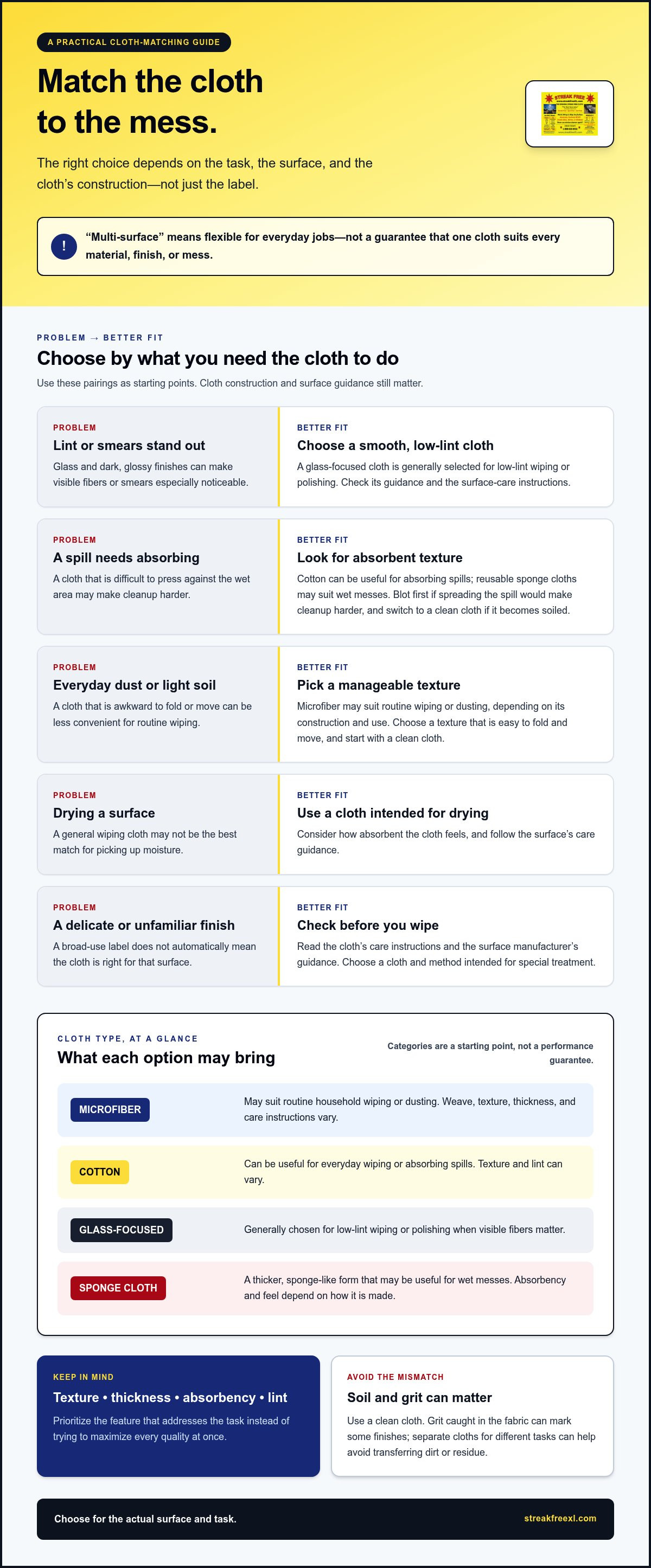
Different cloths feel and behave differently. Some are handy for general wiping; others are chosen to absorb spills, dry a surface, or polish with less lint. When comparing multi surface cleaning cloths, focus on the task rather than the label. No category guarantees the same result across every cloth or surface.
Microfiber and other synthetic cleaning cloths
Microfiber is a widely used category of synthetic cleaning textile. Depending on its construction and how it’s used, a microfiber cloth may suit routine household wiping or dusting. But “microfiber” doesn’t tell you everything: weave, texture, thickness, and care instructions vary. Check the product guidance for suitable surfaces and laundering, especially if you plan to use it on a delicate finish.
Other synthetic cloths also vary in texture and intended use. Read the product guidance rather than assuming all synthetic fibers clean, absorb, or polish in the same way.
Cotton, glass-focused, and reusable sponge cloth options
These categories have different tradeoffs. Cotton cloths are familiar and can be useful for everyday wiping or absorbing spills, though texture and lint can vary. A glass-focused cloth is generally selected for low-lint wiping or polishing. Reusable sponge cloths have a thicker, sponge-like form and may be useful for wet messes. Absorbency and feel depend on how each cloth is made.
Use the task to narrow your options:
- General wiping: Choose a cloth that’s comfortable to handle and suitable for the surface.
- Absorbing spills: Consider a more absorbent texture. Switch to a clean cloth if the working area becomes soiled.
- Drying: Look for a cloth intended for drying, and follow the surface’s care guidance.
- Polishing: A smooth, low-lint cloth may be a sensible choice, especially when visible fibers or smears would stand out.
These are starting points, not guarantees. Names such as “cotton,” “glass cloth,” or “sponge cloth” describe broad categories, while the construction determines how a specific cloth performs. Streak Free XL’s reusable range includes Streakfree towels, Magic cleaning cloths, the Zap cloth, the Ultimate cleaning cloth, and the Holy moly cloth. Compare the reusable cleaning cloth range against the tasks you do regularly.
How to Match a Multi-Surface Cloth to the Task and Surface
Start with the job, then consider the surface. A cloth that works for wiping a damp counter may not be the one you’d choose to dry a polished fixture or remove lint from glass. The aim isn’t to find one winner among multi surface cleaning cloths. It’s to choose characteristics that fit the task and avoid a mismatch.
Which cloth characteristics matter for everyday household cleaning?
Texture affects how a cloth feels against a surface and how it handles everyday soil. Thickness can affect how easy it is to grip or fold. Absorbency matters for spills and drying, while lint is especially noticeable on glass or dark, glossy finishes. Prioritize the feature that addresses the task at hand instead of trying to maximize every quality at once.
| Task | Useful cloth characteristics | Caution |
|---|---|---|
| Wiping everyday dust or light soil | A manageable texture that’s easy to fold and move across the surface | Use a clean cloth. Grit caught in the fabric can mark some finishes. |
| Absorbing a spill | A cloth that feels absorbent and is easy to press against the wet area | Blot first if spreading the spill would make cleanup harder. |
| Drying a surface | A cloth suited to picking up moisture and large enough to handle the area comfortably | Follow the surface’s care guidance, especially if moisture could affect its finish. |
| Polishing or wiping glass | A smooth cloth with lint-conscious construction | Choose a clean cloth. Don’t assume every general-use cloth will leave the finish clear. |
If you’re weighing reusable cloths against disposable options, this paper towel alternative options guide can help you compare them in the context of your everyday cleaning routine.
When should a surface-specific cloth take priority?
Give surface guidance priority over a broad-use label. Delicate coatings, specialty finishes, and manufacturer care instructions may call for a particular cloth or method. If instructions are unclear, test the cloth and method on a small, inconspicuous area first. Stop if the finish changes or the cloth catches.
Vehicle glass is one example where surface-specific guidance can help. For more detail, see this guide to streak-free car window cloth guidance. For any task, match texture, thickness, absorbency, and lint behavior to the need, then let the surface’s care instructions set the limits.
How to Use and Care for Reusable Cleaning Cloths
A simple routine keeps reusable cloths ready for the next job and helps prevent soil or residue from being carried around the home. Start with a clean cloth suited to the surface, follow the surface’s care guidance, clean, then launder the cloth according to its own instructions. Wash each cloth as directed, because care instructions depend on its material and construction.
A simple routine for using cloths across several tasks
Keep the order practical: begin with lighter tasks and use a separate clean cloth for heavier or messier jobs. For example, dust with one cloth before using another to wipe a spill. Don’t carry a cloth from one type of surface or soil to another if it could transfer dirt or residue.
- Choose clean: Pick a fresh cloth appropriate for the surface and task.
- Follow guidance: Use the cleaning method recommended for the surface, including any limits on moisture or rubbing.
- Rotate as you go: Fold the cloth or turn it to expose a clean area as the working side becomes soiled.
- Switch when needed: Get another cloth if the one you’re using is dirty, saturated, or likely to spread residue.
- Launder after use: Follow the cloth’s care label before using it again.
That small reset matters. A visibly clean side doesn’t necessarily mean the whole cloth is clean, so stop wiping if soil could transfer. Make the routine easier by keeping cloths for different tasks visibly distinct or storing them separately. This helps prevent you from reaching for a cloth used for a messier job when you need one for another surface.
How should reusable cleaning cloths be washed and stored?
Check the care label for each cloth instead of applying one wash routine to every textile. Washing directions can vary, so don’t assume the same temperature, detergent, or other laundry steps suit them all. After washing, let each cloth dry fully according to its product guidance before putting it away. Store cloths clean and dry, separated by task where practical.
A basket or divided storage spot can make the distinction easy to see: keep cloths for general wiping apart from those reserved for other jobs. Choose a system that’s simple enough to maintain. A useful routine is straightforward: pick a cloth for the task, switch when it’s soiled, and follow its care instructions afterward.
Explore reusable cleaning cloths for everyday cleaning.
Choosing Multi-Surface Cleaning Cloths That Fit Your Routine
The right setup is the one that makes everyday cleaning straightforward. Before choosing multi surface cleaning cloths, take stock of the jobs you actually do. A quick list can show whether you mostly wipe counters and tables, handle frequent spills, or clean finishes that need a gentler approach.
Use this simple framework:
- List recurring tasks. Focus on the surfaces and cleaning jobs that come up regularly.
- Note surface cautions. Set aside delicate finishes or materials with specific care instructions.
- Match cloths to jobs. Decide whether a task calls for general wiping, absorbing, drying, or polishing.
- Plan for separation. Choose how you’ll keep cloths for different tasks easy to distinguish.
Do you need one versatile cloth or several task-specific cloths?
If your routine is mostly everyday wiping on surfaces with compatible care needs, a smaller number of versatile cloths may be convenient. But one cloth won’t always suit every surface or task. A cloth used for a messy spill, for example, may not be the one you want for polishing. If your home has varied finishes or specialized cleaning needs, separate cloths make it easier to choose the right one and avoid cross-use.
There’s no universal number that suits every household. Choose a selection that reflects your real routine, not an imagined need to keep a cloth for every room. A small, clearly separated group can be simpler than expecting one cloth to handle everything. Start with the tasks you do most often and adjust the system if your habits change.
Explore Streak Free XL’s cleaning cloth range
Streak Free XL offers reusable cleaning textiles, including Streakfree towels, Magic cleaning cloths, the Zap cloth, the Ultimate cleaning cloth, and the Holy moly cloth. The range includes options for comparing reusable cloths for your routine. Choose based on the tasks you’ve identified, and follow each cloth’s product guidance rather than assuming its name alone tells you its material, surface compatibility, or care needs.
You don’t need a complicated system. Start with your regular tasks, respect surface instructions, and keep cloths easy to tell apart. Explore Streak Free XL cleaning cloths.
Make Your Cleaning Cloth Routine Work for You
The best multi surface cleaning cloths aren’t necessarily the ones that claim to do everything. Match the cloth to the task, surface, and finish. Consider whether you’re wiping, absorbing, drying, or polishing, and use a separate cloth when soil or residue could transfer.
Make care part of the routine. Follow the cloth’s care label, let it dry as directed, and store it clean and separate from cloths used for other tasks. These small steps make reusable cloths easier to reach for and use again.
Streak Free XL focuses on reusable cleaning textiles for household surfaces. Its range includes Streakfree towels, Magic cleaning cloths, the Zap cloth, the Ultimate cleaning cloth, and the Holy moly cloth. Explore Streak Free XL cleaning cloths and choose a practical starting point for your routine.
Keep it simple: choose for the job, care for the cloth, and make everyday cleaning more organized.
Frequently Asked Questions
Can one cleaning cloth be used on multiple surfaces?
Yes, a cloth can be used on more than one surface if its construction and care instructions suit each job. Check surface guidance first, especially for delicate coatings or specialty finishes. Switch to a clean cloth or a fresh section when soil or residue could transfer. A cloth used for a messy spill may not be right for polishing a fixture afterward.
What is the best type of cloth for multi-surface cleaning?
There isn’t one best type for every home or task. Choose based on what you need the cloth to do: wipe everyday soil, absorb a spill, dry a surface, or polish with less lint. Microfiber, cotton, glass-focused cloths, and reusable sponge cloths can each suit different jobs. Check product instructions and match the cloth to the surface instead of relying on the category name alone.
Are microfiber cloths safe for all surfaces?
No. Don’t assume a microfiber cloth is suitable for every surface. Construction varies, and a delicate finish or coating may have specific care requirements. Follow the surface manufacturer’s guidance and the cloth’s instructions before cleaning. If the guidance is unclear, test the cloth and cleaning method on a small, inconspicuous area first. Stop if you notice a change to the finish or feel the cloth catch.
Can multi-surface cleaning cloths be used without cleaning chemicals?
Some reusable cleaning textiles are designed to clean household surfaces without requiring chemical cleaning solutions. Whether a cloth is suitable for a particular task depends on its instructions, the surface, and the type of soil. Follow the cloth’s guidance and the surface manufacturer’s care directions. If the task requires a specific cleaning product or method, don’t assume a reusable cloth replaces those instructions.
How do I stop a cleaning cloth from leaving lint or smears?
Start with a clean cloth suited to the surface, especially for glass or glossy finishes where lint and smears show clearly. Follow surface guidance on moisture and cleaning technique, and avoid using a cloth that’s already soiled or saturated. Turn or fold it to expose a clean area as you work. If residue starts spreading instead of lifting, stop and switch to a clean cloth.
How should reusable cleaning cloths be washed?
Follow the care label for each cloth. Washing instructions can vary by product, so don’t assume one temperature, detergent, or laundry routine suits every textile. After washing, let the cloth dry fully according to its product guidance before storing it. Keep clean cloths separate from used ones, and consider storing cloths for different tasks apart so it’s easier to grab the right one.
How many cleaning cloths do I need for a multi-surface cleaning routine?
The right number depends on your household’s cleaning tasks, how often you launder cloths, and whether some surfaces need separate care. Start by listing recurring jobs and setting aside cloths for tasks where soil or residue could transfer. You may prefer a few versatile cloths for compatible everyday jobs, plus separate ones for specialized tasks. Keep the system manageable and adjust it to your routine.