What if keeping stainless steel looking clean had less to do with polishing and more to do with what you leave behind? If fingerprints return right after you wipe, or the surface looks hazy instead of fresh, your cloth or technique may be spreading residue rather than removing it. Learning how to keep stainless steel fingerprint free starts with a clean, soft cloth and a simple wipe-and-dry habit, not constant re-cleaning.
It’s frustrating to see new smudges appear minutes after a wipe-down. The wrong cloth or wiping technique can leave streaks that make the whole surface look worse. A few practical steps can help reduce visible fingerprints and keep everyday smudges from turning into a bigger cleaning job.
This checklist explains how to choose a suitable cloth, wipe with the grain, and dry the surface without spreading marks. You’ll also learn why a clean cloth matters and how Streak Free XL can fit into a repeatable stainless-steel care routine. The steps are simple to use whenever fingerprints show up.
Key Takeaways
- Learn how to keep stainless steel fingerprint free with a repeatable routine that reduces visible smudges without promising a permanently untouched surface.
- Choose a clean, suitable cloth to avoid transferring old oils and grime back onto the surface.
- Know when to try a quick cloth touch-up, a lightly damp wipe, or a finish-compatible polish.
- Focus on fingerprint-prone areas, such as appliance handles, and touch them up when marks appear instead of following a rigid schedule.
- Keep routine care simple with gentle, grain-aware wiping and thorough drying. Aggressive scrubbing isn’t needed.
How to Keep Stainless Steel Fingerprint Free: What Actually Helps?
Wipe the fridge door clean, turn around, and fingerprints are catching the light again. The aim isn’t to keep every hand off the appliance. It’s to reduce visible smudges with a manageable routine, so you’re not constantly polishing or wiping the same spot. That’s the practical answer to how to keep stainless steel fingerprint free.
Fingerprints transfer skin oils to handles and appliance fronts. Leftover cleaner, water, or grime can add streaks that look like fresh marks, even after you’ve wiped. A clean, dry cloth helps lift smudges without adding residue. A Streakfree towel is a useful option for routine surface care, as long as it suits your appliance’s finish.
Why fingerprints show up so clearly on stainless steel
Stainless steel is valued for its strength and corrosion resistance. As Stainless steel explains, its chromium content helps it resist corrosion, but that doesn’t make the surface immune to oily fingerprints. The contrast between a clean area and a thin film of skin oil can make marks stand out, especially under bright kitchen lighting.
The finish matters, too. Brushed steel has fine lines that affect how light and smudges appear. Polished steel reflects more, so streaks may be easier to spot. Some appliances also have a protective fingerprint-resistant coating. These finishes can respond differently to cleaners, cloths, and polishing products, so a method that works on one door may not suit another.
What a realistic fingerprint-free routine can achieve
A repeatable wipe-down can make marks less noticeable and help the surface look fresh. It can’t prevent fingerprints from returning when people use the fridge or touch the handle. Aim for reduced smudges, not permanently untouched steel. That expectation keeps cleaning manageable and avoids encouraging aggressive scrubbing or repeated polishing.
Separate quick touch-ups from a full clean. For a fresh print, a gentle pass with a clean, dry cloth may be enough. If the surface has broader grime or dried-on marks, follow the appliance maker’s care instructions for its specific finish. Some coated surfaces call for mild soap and water rather than polish or stronger cleaners. Using the wrong product may leave residue or affect the finish, so check the manual before changing your routine.
Consistency matters more than force. Use a clean cloth, avoid carrying old oils across the door, and dry any damp areas so they don’t leave new streaks. A few careful passes can make a visible difference without turning everyday fingerprints into a major cleaning job.
The Fingerprint-Free Stainless Steel Checklist: Wipe, Dry, Prevent
To keep stainless steel fingerprint free, make the wipe-down simple and repeatable. You don’t need to scrub harder or polish after every touch. Start with a clean cloth, work gently, and finish by checking for leftover moisture or streaks. The World Stainless Association discusses why stainless steel is valued in kitchens. Thoughtful everyday care helps keep its surface looking fresh, too.
A quick wipe-and-dry sequence
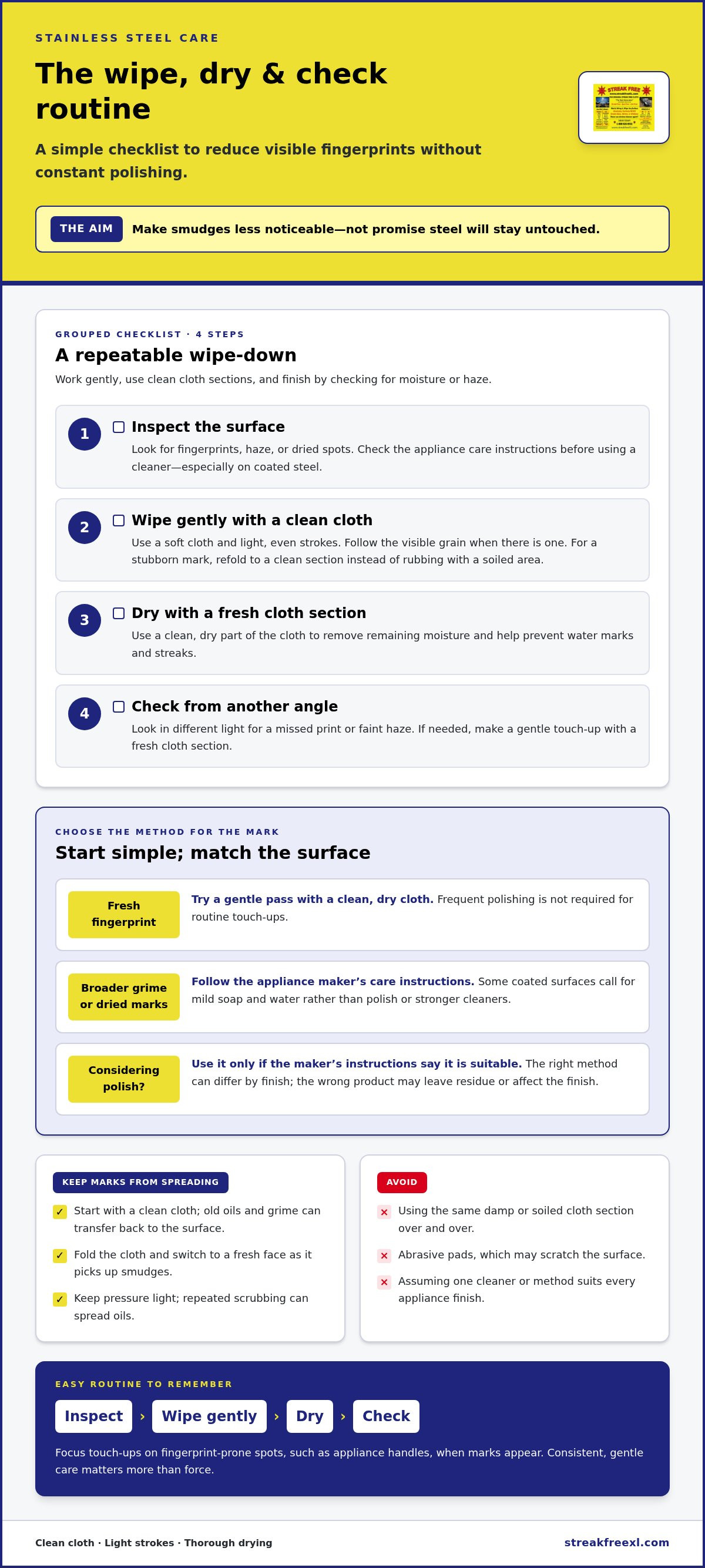
- 1. Inspect. Look for fingerprints, haze, and dried spots. Check the appliance care instructions before using any cleaner, especially if the steel has a coated finish.
- 2. Wipe gently. Use a clean, soft cloth. Follow the visible grain, if there is one, with light, even strokes. For a stubborn mark, refold the cloth to a clean section instead of rubbing back and forth with the same soiled area.
- 3. Dry. Turn to a clean, dry part of the cloth and wipe away remaining moisture. This helps prevent water marks and streaks.
- 4. Check. View the door from another angle or in different light. If you spot a print or haze, use a fresh cloth section for a gentle touch-up.
How to avoid spreading marks
A cloth that’s already damp or loaded with old oils can transfer grime instead of lifting it. Start clean, fold the cloth into sections, and switch to a fresh face as it picks up smudges. Streakfree towels are one option for routine surface care. Use a clean section for wiping and another dry section to finish, if the towel’s care directions allow.
Keep the pressure light. Scrubbing the same spot repeatedly can spread oils across a wider area, while abrasive pads may scratch the surface. Avoid them and follow the appliance maker’s directions for the specific finish. If the manual recommends a particular cleaning method, let that guide your routine rather than applying a general stainless-steel tip to every appliance.
Easy routine to remember: inspect, wipe gently with a clean cloth, dry, then check from another angle. A quick final look catches missed fingerprints and faint haze before you put the cloth away. For a clean cloth option to keep on hand, see Streakfree towels for routine wipe-downs.
Do You Need Polish to Keep Stainless Steel Fingerprint Free?
No. Frequent polishing isn’t required to keep fingerprints under control, and adding polish after every touch-up can make the job more complicated. To keep stainless steel fingerprint free, match the method to the mark and the appliance’s finish. A clean cloth may handle a fresh print; more visible smudges may need a little moisture. Use polish only when the maker’s care instructions say it’s suitable.
The American Cleaning Institute offers practical guidance for cleaning stainless steel. The useful takeaway is to choose a method appropriate for the surface, rather than assuming every appliance needs the same product or routine.
Cloth-only touch-ups versus using a cleaning product
For a fresh fingerprint: Try a clean, dry cloth first, using a gentle stroke. This can lift a light smudge without adding moisture or product. A Streakfree towel is one option to keep handy for everyday surface care.
For more noticeable marks: A lightly damp cloth may help loosen smudges. Use only the cleaner and approach allowed by the appliance’s care instructions, then dry the area with a clean section of cloth. Don’t layer cleaner and polish to try to improve the result. More product can mean more residue to remove, not a clearer finish.
For polish: Treat it as a finish-specific choice, not a required step. Some products are intended for certain stainless-steel surfaces, but an appliance with a coated finish may have different care requirements. Check the maker’s instructions before applying anything new.
How to avoid residue, streaks, and surface damage
A dirty cloth can spread oils across the door, while excess cleaner or polish may leave a film that catches the light and looks like another smudge. Keep the cloth clean, use only the amount of product directed, and finish by drying if the care instructions call for it. If the manufacturer allows testing, try an unfamiliar method on a discreet area first.
Be especially careful with coated finishes. There’s no single rule for every coating, so don’t assume a polish that works on one appliance is safe for another. Check the care label or manual before using polish, vinegar, or other cleaners. Some finishes have specific restrictions.
Bottom line: Start with the simplest suitable option: a dry cloth for a light print, a lightly damp cloth when the mark needs more help, and polish only if the appliance’s care guidance supports it. This keeps the routine straightforward and reduces the chance of leaving a new film behind.
A Simple Maintenance Checklist for Fingerprint-Prone Areas
Not every part of the fridge needs the same attention. Focus on the places hands land most: the handle, the control panel, and the front of the door. These high-touch spots tend to show marks first, while less-used side panels may stay presentable longer. Household routines affect how quickly fingerprints return, so skip a rigid cleaning schedule. Touch up visible marks as part of ordinary kitchen tidying.
Which stainless-steel areas need the most frequent attention?
Take a quick look at the handle and control panel while putting groceries away or wiping the counter. Check the main door front, too, especially around the areas people push or pull. If those spots look smudged, give them a light wipe with a clean cloth suited to the appliance’s finish. This focuses your effort where it’s needed instead of turning every small print into a full-appliance cleaning job.
How to keep your cleaning cloth ready for the next wipe
A cloth can only help if it’s clean enough to pick up marks rather than move them around. Keep a cloth for stainless-steel touch-ups separate from those used on greasy stovetops, gritty spills, or other dirtier jobs. After use, follow the cloth’s care label for washing and drying. Fabric-care products or washing choices that leave residue may transfer a film to the appliance, so stick to the label’s directions.
For more detail on selecting a cloth for stainless steel, read this stainless steel polishing cloth guide. For day-to-day care, keep the cloth somewhere clean and easy to reach, but away from splash-prone or greasy areas. A Streakfree towel can be used for routine surface care according to its care instructions.
A practical mini-checklist:
- Notice marks on handles, control panels, and appliance fronts during normal kitchen tidying.
- Wipe only where fingerprints are visible, rather than cleaning by the clock.
- Keep a clean cloth reserved for these lighter touch-ups.
- Wash and dry it according to its care label before using it again.
Streakfree towels are available for routine wipe-downs at Streak Free XL.
Keep Stainless Steel Fingerprint Free with a Routine You Can Repeat
The goal isn’t a fridge door that never gets touched. It’s a surface that looks fresh without turning every fingerprint into a polishing project. To keep stainless steel fingerprint free, stick with the basics: a clean cloth, gentle strokes, wiping with the visible grain, and drying any damp areas. Fingerprints may still appear. That’s normal, and they don’t call for aggressive scrubbing.
When a Streakfree towel fits into the routine
A Streakfree towel can be part of routine household wipe-downs, including stainless steel. Start with a clean section so you’re not moving old oils around, and follow the towel’s care instructions to keep it ready for the next use. Stainless-steel appliances can have different finishes, so check the appliance maker’s guidance before using a cloth or cleaning method on a specialty coating.
Keep the towel somewhere clean and convenient, and reach for it when marks show up on the fridge handle or door. There’s no need to polish the whole surface because one spot has a fingerprint. A quick, careful touch-up is often a more manageable approach.
The quick checklist to remember
- Start clean. Use a clean cloth and check the appliance’s surface-care instructions, especially for coated finishes.
- Wipe gently. Use light strokes, following the grain if it’s visible. Avoid rubbing hard over the same spot.
- Dry the surface. Use a clean, dry section of cloth to remove moisture and help prevent streaks.
- Touch up as needed. Focus on visible marks and high-contact areas instead of over-cleaning or polishing the full door.
That’s the repeatable routine: clean cloth, gentle wipe, grain-aware strokes, and a dry finish. It keeps everyday care simple while helping reduce visible smudges. Streakfree towels and cleaning cloths are available at Streak Free XL.
Make Stainless Steel Care an Easy Habit
Fingerprints happen. The goal isn’t a door that stays untouched, but a surface that looks fresh without constant polishing. The practical answer to how to keep stainless steel fingerprint free is to use a clean cloth, wipe gently with the grain when visible, and dry the surface to help avoid streaks. For everyday marks, a quick touch-up is often enough.
Keep your appliance’s care instructions in mind, especially if it has a coated finish, and save polishing for surfaces where the manufacturer says it’s suitable. A simple routine is more useful than scrubbing harder or layering on products.
Streak Free XL specializes in cleaning textiles, including Streakfree towels and Magic cleaning cloths for your regular surface-care kit. Choose a cloth for your stainless-steel routine at Streak Free XL.
Frequently Asked Questions
How do you keep stainless steel appliances from getting fingerprints?
You can’t stop every fingerprint, but a simple routine helps keep marks less visible. Use a clean, soft cloth for fresh smudges, wipe gently in the direction of the grain if you can see it, and dry any damp areas with a clean section. To keep stainless steel fingerprint free, also check the appliance care instructions, especially if its surface has a protective coating.
What is the best cloth for wiping fingerprints off stainless steel?
A clean, soft cloth is a practical choice for lifting fingerprints without adding residue. Microfiber can work well when it’s clean and suitable for the appliance’s finish, but the cloth’s condition matters: grit or trapped grime can scratch or spread oils. Streakfree towels and Magic cleaning cloths are options for routine surface care. Follow the cloth’s care label and the appliance maker’s cleaning guidance.
Can you keep stainless steel fingerprint free without polish?
Yes. Polish isn’t required for every touch-up. A clean, dry cloth may remove a fresh print, while a lightly damp cloth can help with more noticeable marks. Dry the area afterward if the appliance’s care instructions allow that method. Fingerprints can still return with normal use, so aim to reduce visible smudges rather than keep the surface permanently untouched. Use polish only if the maker recommends it for that finish.
Why does stainless steel look streaky after cleaning?
Streaks can come from leftover cleaner, excess moisture, or oils transferred by a soiled cloth. Too much product may leave a film that catches the light, while wiping with a damp cloth and not drying the surface can leave visible marks. Try a clean cloth section and gentle strokes, then check the finish from another angle. For coated appliances, follow the manufacturer’s instructions before changing products or methods.
Should you wipe stainless steel with the grain?
Yes, if the surface has a visible grain, follow its direction with gentle, even strokes. The fine lines in brushed finishes make the grain visible, and wiping with it can help avoid a crosswise pattern of marks. If you can’t see a grain, don’t guess or scrub harder. Use light strokes and follow the appliance’s care instructions, since polished or coated finishes may need specific handling.
Can microfiber cloths scratch stainless steel?
A clean, soft microfiber cloth is generally suitable for wiping many stainless-steel surfaces, but don’t use a cloth with grit or debris caught in it. Dirt can act like an abrasive and leave scratches, especially if you press hard. Check the appliance’s care instructions for coated finishes, use a fresh, clean section of cloth, and avoid abrasive pads and rough scrubbing.
How often should you wipe fingerprints off stainless steel?
There’s no fixed schedule that suits every household. Wipe fingerprints when they’re visible or distracting, and pay attention to high-touch areas such as handles and control panels. A quick touch-up during ordinary kitchen tidying may be enough. A full-surface clean isn’t necessary every time someone touches the fridge. Household use and the finish affect how quickly marks show, so let the surface guide you.
Keep a suitable cloth ready for everyday touch-ups. Explore Streakfree towels and cleaning cloths at Streak Free XL.