A cloth labeled “polishing” isn’t automatically the best polishing cloth for stainless steel. The material, texture, condition, and intended task matter more than the label. Choose poorly, and you may trade fingerprints for lint, smears, or streaks.
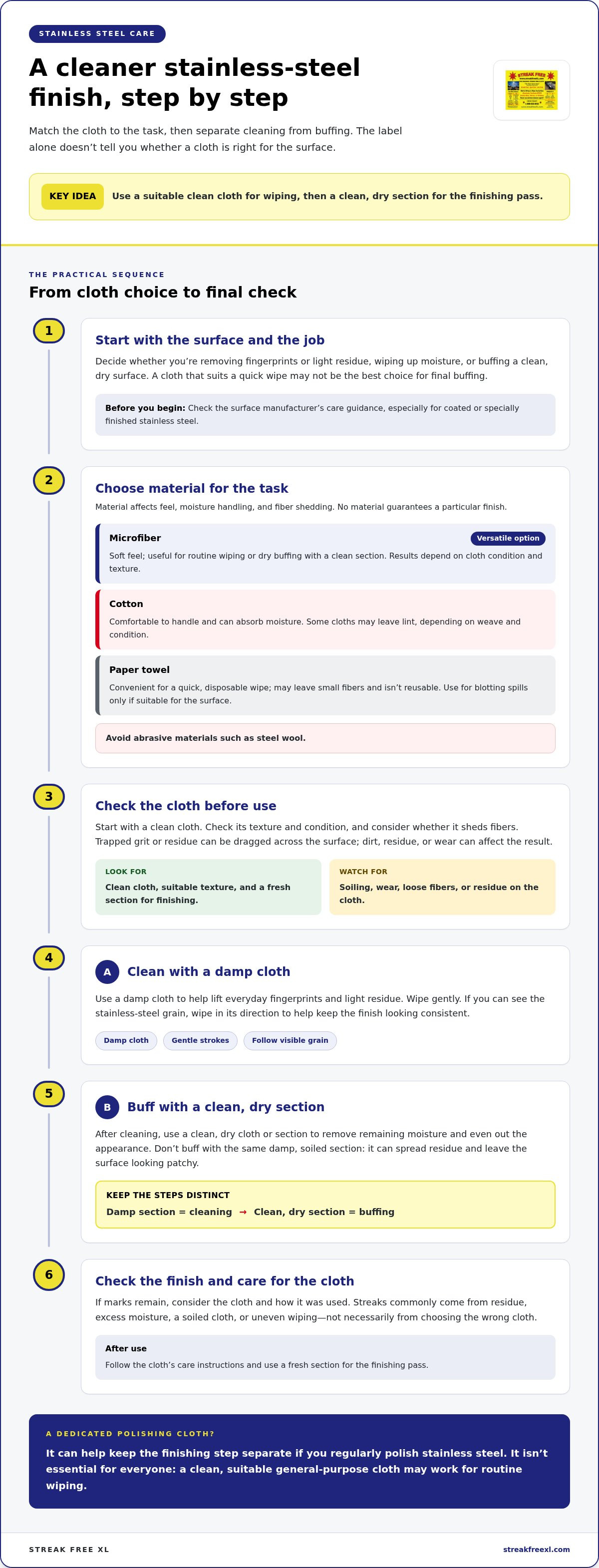
A clean, even-looking finish doesn’t require a complicated routine. A soft microfiber cloth is a common choice for stainless steel: use a damp cloth for cleaning, then a separate dry cloth or clean section for buffing. Wipe gently with the grain when it’s visible, and check the surface manufacturer’s care guidance before you start.
In this guide, you’ll compare cloth materials, match a cloth to the surface and task, and learn how to care for it. You’ll also find practical checks for deciding whether a dedicated polishing cloth is useful or whether a clean general-purpose cloth fits your routine. Streak Free XL towels are one of the cleaning textiles you can consider. The aim is simple: less guesswork, fewer visible marks, and a finish you’re happy with.
Key Takeaways
- Choose a polishing cloth for stainless steel by matching its material and intended task to the surface, rather than relying on the product label alone.
- Compare microfiber and cotton by feel and potential lint to find a cloth that suits your cleaning routine.
- Check the cloth’s condition and care instructions before use. A worn or poorly maintained cloth can leave marks.
- Use a clean cloth, wipe gently, and buff with a dry section. Follow the surface manufacturer’s care guidance when available.
- Explore Streak Free XL’s cleaning textiles, including Streakfree towels, as you consider which cloth suits your needs.
What Makes a Good Polishing Cloth for Stainless Steel?
A polishing cloth has two practical jobs: remove light residue and buff the surface so it looks even. Fingerprints, water marks, and smudges can stand out on stainless steel, especially when light catches the finish. The right polishing cloth for stainless steel is one that suits the task and surface, not simply one with “polishing” on its label.
Separate cleaning from buffing. A damp cloth can help lift everyday fingerprints and residue. After cleaning, use a clean, dry section to remove remaining moisture and even out the appearance. Microfiber is made from fine synthetic fibers designed to pick up and hold small particles. You can read more about its material properties in this Microfiber overview. The material alone, however, doesn’t guarantee a particular result.
Match the cloth to the surface condition and the job. A cloth that works for a quick wipe may not be the best option for final buffing. Check the surface manufacturer’s care guidance, especially for coated or specially finished stainless steel. If you can see the grain, wipe gently in its direction to help keep the finish looking consistent. Start with a clean cloth so trapped grit or residue isn’t dragged across the surface.
What should a stainless-steel polishing cloth do?
A suitable cloth should help remove fingerprints and light residue without adding fuzz or leaving excess moisture behind. Everyday wiping removes what’s on the surface; final buffing comes after cleaning and uses a clean, dry area of cloth. Reusing a damp, soiled section to buff can spread residue and leave the surface looking patchy rather than even.
Why do some cloths leave streaks or lint?
Visible marks can come from residue, too much moisture, or a dirty cloth. Loose fibers may leave lint, while a rough or uneven texture may catch differently on a particular finish. Pressure and direction also affect the appearance: inconsistent strokes can make wipe marks more noticeable. Streaks commonly come from residue, excess moisture, a soiled cloth, or uneven wiping.
No single cloth suits every stainless-steel task. Check its texture and condition, decide whether you’re cleaning or buffing, and follow the care instructions for both the cloth and the surface. This helps you work toward an even-looking finish without assuming that any cloth can prevent every mark.
Polishing Cloth Materials Compared: Microfiber, Cotton, and Other Options
Cloth material affects how it feels, handles moisture, and sheds fibers. Those differences can be especially noticeable on reflective stainless steel. No material guarantees a particular finish, though. The cloth’s cleanliness, the surface condition, and whether you’re wiping up moisture or buffing a dry surface all matter.
Is microfiber a good choice for stainless steel?
Microfiber is a common cleaning textile made from fine synthetic fibers, giving it a soft feel. Its practical advantage is versatility: it can be used for routine wiping, while a clean, dry area can help with final buffing. The cloth’s condition still matters. Dirt, residue, or wear can affect the result, so follow its care instructions and use a fresh section for the finishing pass.
| Material | Useful qualities | Possible drawbacks | Suitable task |
|---|---|---|---|
| Microfiber | Soft feel; useful for everyday surface cleaning | Performance varies by cloth condition and texture | Routine wiping or dry buffing with a clean section |
| Cotton | Comfortable to handle; can absorb moisture | Some cloths may leave lint, depending on weave and condition | Wiping up moisture or general cleaning |
| Paper towel | Convenient for a quick, disposable wipe | May leave small fibers and isn’t reusable | Quickly blotting up spills, if suitable for the surface |
When might cotton or another cloth suit the task?
Choose according to what you need the cloth to do. Cotton may be useful for absorbing moisture, while a low-lint cloth may be a better fit for buffing a clean, dry surface. Before using a cloth on a reflective area, check its texture and whether it sheds fibers. For stainless steel care, Penn Stainless Products also advises avoiding abrasive materials such as steel wool in its Cleaning Stainless Steels guidance.
A cloth for wiping up water doesn’t automatically suit final polishing. Check the surface manufacturer’s care guidance, too. When comparing options for a polishing cloth for stainless steel, consider the material, feel, and care instructions, then assess the result on your own surface. If you’re considering a specialized cleaning textile, Streakfree towels are one option in Streak Free XL’s range.
How to Choose a Polishing Cloth for Your Stainless-Steel Finish
The right choice depends on the surface and the job. A dedicated cloth can be useful if you regularly polish stainless steel or want to keep a separate cloth for finishing. It isn’t essential for everyone: a clean, suitable general-purpose cloth may work for routine wiping, while a separate polishing cloth can help keep the final step distinct.
Don’t assume that any cloth or polish suits every stainless-steel surface. Appliances and fixtures may have different finishes or coatings, so check the manufacturer’s care guidance before using a product. A smear doesn’t necessarily mean the cloth is wrong. Cleaning residue, excess moisture, or uneven wiping can also leave visible marks.
Does stainless steel need a special polishing cloth?
Not necessarily. Choose according to the task, not the label alone. If you want to keep everyday wiping separate from buffing, use a dedicated cloth for the finishing step or reserve a clean section for it. If you prefer one versatile cloth, make sure it’s clean, suitable for the surface, and maintained according to its care instructions.
What should you check before choosing a cloth?
- Surface: Identify whether you’re wiping an appliance, fixture, or another stainless-steel item. Look for special care instructions or a coating.
- Task: Decide whether you need to remove light residue, wipe up moisture, or buff a clean, dry surface. One cloth may not suit every step.
- Condition: Choose a clean cloth without grit, trapped debris, or leftover cleaning residue. A contaminated cloth can transfer marks rather than remove them.
- Care and handling: Read the cloth’s care guidance. Choose a size that’s easy to hold and control, especially around edges and handles.
Size matters in practice. A smaller cloth may be easier to control on a narrow handle or trim. A larger one may be more manageable across a broad panel. Choose a size that lets you wipe steadily without bunching the cloth or reusing a dirty section by mistake.
Quick rule: match the cloth to the surface, task, condition, and care instructions. Use those four checks to narrow your options. If marks remain, review your technique and check for residue or moisture before switching cloths. A polishing cloth for stainless steel is a useful tool, but the surface’s care needs and how you use the cloth matter just as much.
How to Use and Care for a Stainless-Steel Polishing Cloth
A clean cloth works best when you use it in a simple routine. Keep cleaning and buffing separate: clean the surface first, then buff. This helps limit smears from leftover moisture or residue.
- Start clean. Check the cloth for grit, dust, or residue before it touches the surface.
- Wipe gently. Use light, even passes. If the cloth picks up visible dirt or moisture, turn to a clean section.
- Buff dry. Use a dry section of the cloth, or a separate clean cloth, for the finishing pass.
Follow the appliance or surface manufacturer’s care instructions whenever they’re available. The cloth’s label is your guide to washing and drying it. Don’t assume every polishing cloth can be cleaned the same way.
Which wiping technique helps reduce visible marks?
Test your method on a less noticeable area first, particularly if the surface has a special finish. Use light, even passes and turn to a clean section as needed. If the stainless steel has a visible grain, wipe in that direction. This keeps your approach consistent without pressing hard or repeatedly spreading residue over the same area.
How should you clean and store the cloth?
Use the cloth’s care label for washing and drying instructions. Before storing it, make sure it’s free from grit and leftover cleaning residue that could transfer to another surface. Keep cloths used for different tasks separate where practical. A cloth used on a dirtier surface may carry particles you don’t want on a polished appliance. Setting aside a clean cloth for finishing makes it easier to buff without picking up residue.
The same selection habits can help with other reflective surfaces, too. A streak-free car window cloth is another example of choosing a cloth according to the surface and task rather than expecting one cloth to suit everything.
Keep your polishing cloth for stainless steel clean and ready for the next wipe. Explore Streak Free XL’s cleaning textiles to find a cloth for your routine.
Find the Right Polishing Cloth for Stainless Steel in Streak Free XL’s Range
Choosing a polishing cloth for stainless steel comes down to matching the cloth to your task and surface, then following its care guidance. Streak Free XL specializes in cleaning textiles, with options including Streakfree towels, Magic cleaning cloths, the Zap cloth, the Ultimate cleaning cloth, and the Holy moly cloth.
How to match your cleaning task to the cloth
First decide what you need to do. Routine wiping, drying moisture, and final polishing are related but distinct tasks. As you compare cloths, consider how each feels and whether it suits the step you have in mind. Use a clean, dry section for buffing, and follow the stainless-steel surface’s care instructions. Streakfree towels are one option in the range to consider as you browse.
What to consider when browsing Streak Free XL cloths
Compare the stated intended use and care guidance for each cloth. Those details help you decide whether it fits your routine and how to maintain it. A product name alone doesn’t explain how a cloth should be used on every surface, so match the product guidance to your task and the care needs of your stainless steel.
- For routine wiping: Look for guidance that fits everyday surface cleaning.
- For drying or buffing: Consider whether the cloth’s stated use and care instructions suit that finishing step.
- For ongoing use: Follow the cloth’s care label so it stays ready for the tasks it’s designed for.
Streak Free XL’s range brings together specialized cleaning textiles. Compare the products’ stated uses, choose an option that suits your routine, and keep cloths clean between tasks. This gives you a practical way to narrow your choices without expecting one cloth to suit every surface or deliver the same result in every situation.
Ready to compare the options? Explore Streak Free XL’s cleaning textiles and find a cloth that fits the way you clean.
Choose Your Cloth and Polish with Confidence
The right polishing cloth for stainless steel depends on the surface, the task, and the cloth’s care instructions. Choose a clean cloth suited to routine wiping or final buffing, and don’t assume every material or polish is right for every finish. A gentle, consistent method helps you work toward an even-looking result.
Streak Free XL’s range includes Streakfree towels, Magic cleaning cloths, the Zap cloth, the Ultimate cleaning cloth, and the Holy moly cloth. Compare their stated uses and care guidance as you decide which option fits your cleaning routine.
Explore Streak Free XL cleaning cloths and find a textile to consider for your home. With a suitable cloth and a simple routine, you can approach stainless-steel care with less guesswork and more confidence.
Frequently Asked Questions
Is microfiber good for polishing stainless steel?
Yes, microfiber is a commonly used option, but whether it suits your surface depends on the cloth, its condition, and the task. Choose a clean cloth without visible grit or residue, and follow its care instructions. Try your method on a discreet area first, especially if the finish is delicate or unfamiliar. Microfiber can be useful for wiping or buffing, but it can’t guarantee a streak-free or scratch-free result.
Can I use a regular cloth to polish stainless steel?
Yes, a clean regular cloth may work for some stainless-steel wiping tasks. Check its texture and condition first: lint, leftover residue, or a rough surface may affect the finish. Match the cloth to the job, whether you’re wiping up moisture or buffing a clean surface. Test it on a small, inconspicuous area and follow the surface manufacturer’s care guidance. Not every stainless-steel surface needs a dedicated polishing cloth.
What is the best cloth for polishing stainless steel?
There’s no single best cloth for every stainless-steel surface or task. Compare the material, potential for lint, cloth condition, intended use, and care instructions. A clean cloth suited to the job is a sensible place to start, whether you’re doing routine wiping or final buffing. A polishing cloth for stainless steel should match the surface’s care needs. Don’t assume one material always outperforms all others.
How do you polish stainless steel without leaving streaks?
Start with a clean cloth and use gentle, even passes. Once the surface is clean, buff with a dry section if appropriate for its care instructions. Residue, excess moisture, or a dirty cloth can contribute to visible marks, so switch to a clean area if needed. Check the appliance or surface manufacturer’s guidance, and test your method on an inconspicuous spot before working on a prominent area.
Should I polish stainless steel with or against the grain?
If the stainless steel has a visible directional grain, wipe along it to help keep the finish looking consistent. First check the surface, since the grain may not be obvious on every finish. Test your method on an inconspicuous area and use light, even passes. The appliance or surface manufacturer’s care instructions take priority. Wiping with the grain is a useful approach, not a rule for every finish.
Can I use the same polishing cloth on every stainless-steel surface?
You may use one cloth for more than one task, but stainless-steel finishes and cleaning needs can differ. A cloth carrying grit or residue from another surface may transfer it and leave unwanted marks. Keep cloths clean, and use a separate cloth or clean section when needed. Follow the surface and cloth care guidance, and test first, especially on a prominent or delicate finish.
How should I wash a stainless-steel polishing cloth?
Follow the care label on the cloth, because washing and drying instructions can vary. Don’t assume one cleaning method suits every polishing cloth. Keep it away from grit and cleaning residue that could transfer during its next use, and store it clean and dry as directed. Before using it again, check that the cloth is in suitable condition for the surface and task.