Could one cloth leave your dashboard spotless and your screen streak-free, or do those surfaces need different care? A clean car interior can still end up smeared or covered in lint when the cloth and technique don’t suit the surface. Using a holy moly cloth for car interior detailing starts with matching your approach to the material, not wiping every surface the same way.
The Holy Moly cloth is part of Streak Free XL’s range of cleaning textiles. Before using it in your car, check the vehicle’s care instructions and the cloth’s directions. Dashboards, screens, and trim can have different care needs, so a cautious approach helps you clean without applying unnecessary pressure or moisture.
This guide walks you through a repeatable routine: prepare the cloth, work in small sections, and use a gentle touch on delicate areas. You’ll also learn how to reduce smears and lint, which surfaces call for extra care, and how to decide whether the cloth fits your regular interior-cleaning tasks.
Key Takeaways
- Match your wiping approach to the surface instead of treating every part of the cabin the same.
- Check your vehicle manual and test an inconspicuous spot before cleaning a larger area.
- Compare a dedicated cloth with paper towels and household cloths to choose the right tool for each task.
- Follow a simple routine: clear loose debris, wipe gently, and inspect for missed smudges.
- Use the holy moly cloth for car interior detailing on surfaces where the care instructions permit it.
Why use a dedicated cloth for car interior detailing?
A dusty dashboard is easy to spot. The smudges left behind after wiping it down are even more frustrating. Screens, coated trim, and leather also call for care, so it’s worth choosing a clean cloth and adjusting your technique to the finish. A cloth set aside for interior cleaning gives you a consistent tool for routine dust and light marks, without treating every surface as if it were the same.
Interior detailing means carefully cleaning surfaces inside the vehicle, such as the dashboard, door panels, seats, and center console. It differs from polishing exterior glass or cleaning paint. Car detailing covers both interior and exterior care, but materials and methods vary. This guide focuses on the cabin, where a considered wipe can help with everyday dust and smudges.
Streak Free XL sells the Holy Moly cloth as part of its cleaning-textile range. It can be used as a wiping tool where the vehicle’s care instructions allow that approach. Results depend on the surface, what is on it, your technique, and whether the cloth is clean. A cloth won’t repair scratches or automatically remove set-in stains.
What does a car interior detailing cloth actually do?
A dedicated cloth gives you a consistent way to wipe a surface, rather than reaching for a paper towel or an item used for other household tasks. Used carefully, it can pick up everyday dust and light smudges on suitable surfaces. Embedded spills, sticky residue, and damaged finishes are different problems and may call for another approach. Avoid pressing hard to force a mark away.
Check the cloth as you work. If it looks dusty or picks up visible grime, refold it to use a clean section or switch to a clean cloth. This helps prevent dragging collected dirt across another area and makes it easier to see whether a mark is lifting or spreading.
Which interior surfaces call for extra care?
Dashboard trim, door panels, and center consoles often collect dust and fingerprints, but their finishes can vary between vehicles. Screens, coated surfaces, and leather need especially gentle, material-aware handling. Don’t assume a technique that works on a hard panel is suitable for a display or seat.
For an unfamiliar or delicate material, start with the vehicle manufacturer’s care guidance. If you’re unsure how a finish will respond, test a small, inconspicuous area before cleaning more broadly. Use light pressure and stop if you notice a change in appearance. Checking first is safer than trying to correct a mark caused by an unsuitable method.
How to match cloth technique to each car interior surface
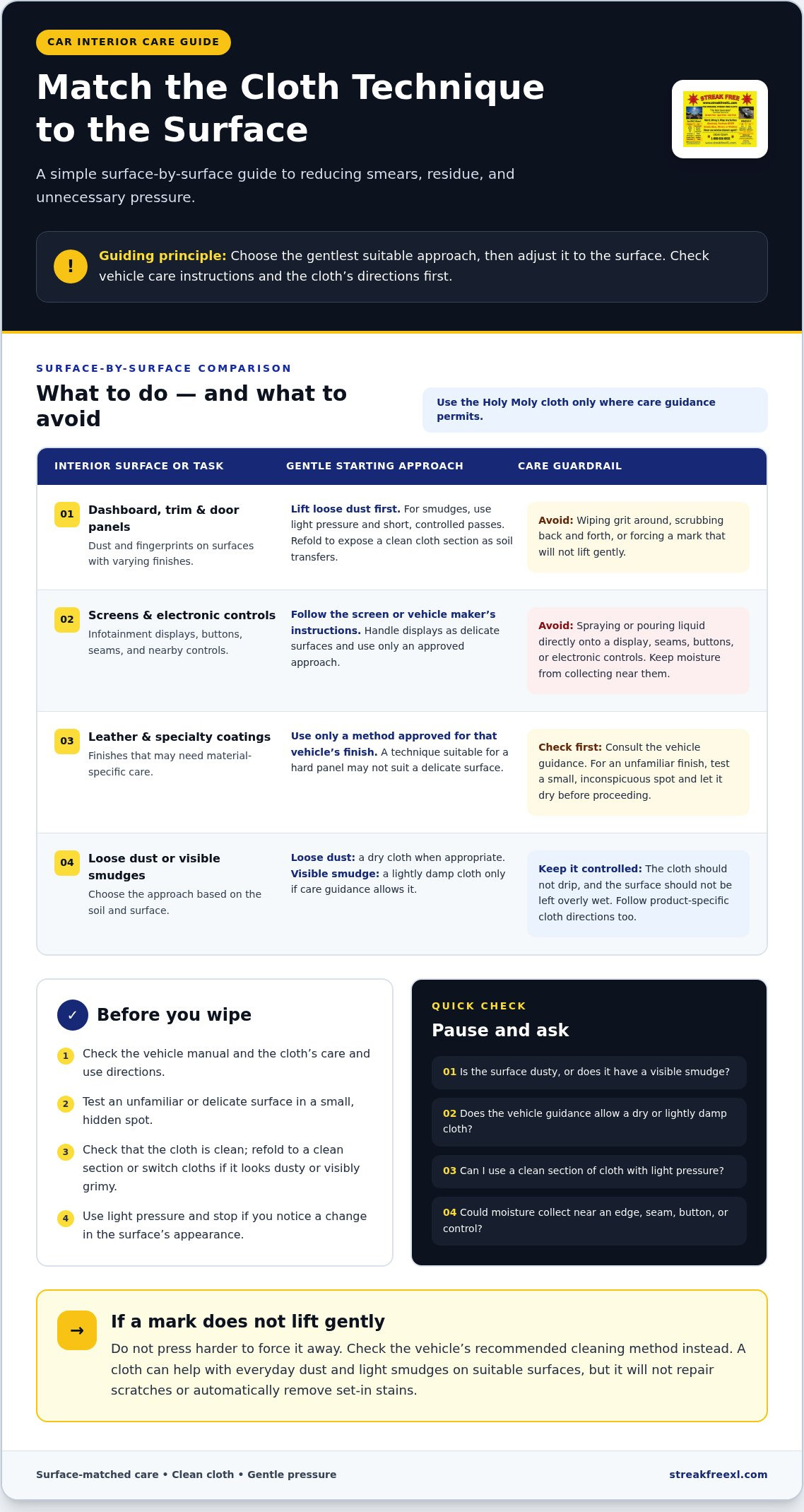
There’s no single wiping method for every cabin finish. A textured dashboard, glossy trim, touch screen, and leather seat can respond differently to moisture and pressure. Before using a Holy Moly cloth or any other cleaning cloth, check the vehicle manual. If the material or finish is unfamiliar, test a small, hidden spot first and let it dry so you can check for changes.
Keep the task simple: use a dry cloth for loose dust when that’s appropriate for the surface. For visible smudges, use a lightly damp cloth only if the vehicle’s care guidance allows it. The cloth should not drip, and surfaces shouldn’t be left overly wet. Follow the cloth’s product-specific directions as well. Edmunds’ guide to detailing car interior care also emphasizes adapting the approach to the area being cleaned.
Careful, surface-matched wiping helps limit residue and unnecessary abrasion. That’s the guiding principle for using the holy moly cloth for car interior detailing: choose the gentlest suitable approach, then adjust it to the surface.
Cleaning dashboards, trim, and door panels
Lift loose dust before tackling visible smudges. Wiping grit around can leave marks, especially on glossy or easily scratched trim. Use light pressure and short, controlled passes rather than scrubbing back and forth. As soil transfers, refold the cloth to bring a cleaner section into contact with the surface. If a mark doesn’t lift with gentle wiping, don’t force it. Check the vehicle’s recommended cleaning method instead.
Handling screens, leather, and other delicate finishes
Treat infotainment screens as delicate. Follow the screen or vehicle manufacturer’s cleaning instructions, and don’t spray or pour liquid directly onto a display, seams, buttons, or electronic controls. For leather, use only a method approved for that vehicle’s specific finish. Apply the same caution to specialty coatings: a technique suitable for a hard panel may not suit a delicate surface.
Before wiping, pause and ask:
- Is this surface dusty, or does it have a visible smudge?
- Does the vehicle guidance allow a dry or lightly damp cloth?
- Is the cloth clean, and can I use light pressure?
- Could moisture collect near an edge, seam, button, or control?
When using the holy moly cloth for car interior detailing, follow the cloth’s care and use directions alongside your vehicle’s guidance. Streak Free XL’s Holy Moly cleaning cloth is one cleaning textile you can incorporate where the surface-care instructions support wiping.
Holy Moly cloth versus other ways to clean car interiors
A dedicated cleaning cloth, a paper towel, and an ordinary household cloth can all have a place in car care. The useful question isn’t which one wins every time. Consider what you’re cleaning, how dirty it is, and whether the cloth is clean and suitable for that surface. The right interior-cleaning method depends on the surface and the soil.
Use this comparison as a starting point, not a substitute for the vehicle maker’s care directions.
| Cleaning option | Suitable task | Potential drawback | Careful-use note |
|---|---|---|---|
| Dedicated cleaning cloth, such as the Holy Moly cloth | Repeatable light cleaning of appropriate interior surfaces | A soiled cloth can transfer grime; not every finish suits the same method | Use a clean area of the cloth and follow vehicle and cloth care instructions |
| Disposable paper towel | A quick, small cleanup where the vehicle guidance permits it | Can tear or leave bits behind, particularly if it gets wet | Use gently, and avoid rubbing delicate finishes or screens |
| Ordinary household cloth | Basic wiping if it’s clean and suitable for the surface | Its previous use or leftover cleaning products may make it unsuitable | Choose a clean cloth with no visible debris or residue |
When a dedicated cleaning cloth is a practical choice
A dedicated cloth can make everyday upkeep easier to repeat: set it aside for suitable cabin surfaces, use it for light dust or smudges, and check it as soil transfers. A cloth can be used again if its care instructions allow, so it may be ready for another routine wipe rather than discarded after one task. That doesn’t make it right for every surface or every mess. The holy moly cloth for car interior detailing is a practical choice for tasks where the vehicle’s material and care instructions permit its use.
Paper towels can be convenient for a one-off task, but convenience isn’t a reason to scrub. A household cloth may also work for some wiping, provided it’s clean and hasn’t picked up grit or residue elsewhere. If you can’t tell what’s on it, choose a clean cloth instead.
When another method or specialist care may be more suitable
Routine dust and light fingerprints are different from a set-in stain, persistent odor, or contamination deep in upholstery. A cloth alone may not be the appropriate treatment for those problems. Check the vehicle maker’s directions for sensitive materials and finishes, and use a method suited to the issue. If the guidance calls for specialist material care, follow it rather than increasing pressure or adding an unapproved product.
Keep expectations realistic. Wiping can clean a surface, but it can’t repair fading, scratches, or material deterioration. Choose the method for the job, and stop if the finish changes or the mark doesn’t respond to gentle cleaning.
How to detail your car interior with a Holy Moly cloth
A tidy routine helps prevent loose grit from turning into extra rubbing and gives delicate finishes their own careful attention. Before you begin, check the vehicle’s care guidance and the cloth’s instructions. The holy moly cloth for car interior detailing can be part of your cabin-cleaning routine where its use suits the surface. Don’t assume every interior material should be wiped the same way.
A careful step-by-step cabin cleaning routine
- Prepare the cabin. Park safely, remove personal items, and clear loose debris from the areas you plan to clean. Pick up grit instead of dragging it across trim. Set screens, leather, and other delicate finishes aside for a separate, material-specific approach.
- Check the surface guidance. Consult the vehicle manual for unfamiliar finishes. Test your chosen method in a hidden spot and let the area dry before moving on. If you see a change in appearance, stop.
- Choose dry or lightly damp wiping. For loose dust, a dry cloth may be appropriate if the surface guidance allows it. For light smudges, use a lightly damp cloth only when permitted. It shouldn’t drip, and the surface shouldn’t be left wet.
- Work in manageable sections. Start with cleaner areas, then move toward dirtier ones. Use light pressure and controlled passes. Refold the cloth as soil transfers so you’re wiping with a cleaner section. Switch to a clean cloth if it becomes visibly soiled.
- Inspect your work. Check each area in good light for remaining dust, smears, or moisture. Let surfaces dry, and don’t keep rubbing a mark that isn’t lifting. Check the care instructions for that material before trying another method.
Avoid streaks, residue, and accidental damage
Less moisture gives you more control. Keep liquid away from electrical controls, openings, seams, and buttons. Never apply it directly to a screen or control panel. For stubborn marks, pause instead of scrubbing harder. The mark may need a surface-specific method, and extra friction may affect the finish. Follow the vehicle maker’s directions for sensitive areas, and use only a method approved for the material.
Keep window cleaning as its own task. Glass has different cleaning considerations from dashboards and trim, so follow guidance for that surface rather than applying the cabin routine automatically. For advice focused specifically on streak-free car window cloths, see the dedicated glass guide.
Use a simple sequence: prepare, check, wipe gently, and inspect. If the Holy Moly cloth’s instructions and the vehicle’s care guidance suit the surface, it can be part of your car-care setup. Learn more about the Holy Moly cloth.
Is the Holy Moly cloth right for your car-care routine?
The right cleaning cloth is one that fits the jobs you do and the materials in your vehicle. Streak Free XL sells the Holy Moly cloth as part of its cleaning-textile range. Its suitability for a particular interior surface depends on the surface-care instructions and the cloth’s directions, not on a claim that one method works for every finish or mess.
Start by identifying your main task. Are you mostly picking up cabin dust and light fingerprints, or trying to tackle an old spill? Do you clean hard trim, or does your routine include screens, coated surfaces, and leather? Your answers help you decide where a cloth may fit and where the vehicle’s specific care guidance should lead.
A quick fit check before adding a cloth to your routine
Use this quick check to decide whether the holy moly cloth for car interior detailing suits your usual upkeep:
- Routine dusting: A cloth may suit light dust on surfaces where the vehicle’s care instructions permit wiping.
- Light smudges: Use it for everyday marks only with a suitable method and gentle pressure.
- Delicate materials: Put the manufacturer’s instructions first for screens, leather, and unfamiliar finishes. Test an inconspicuous spot if the guidance allows wiping.
- Deeper stains or contamination: A cloth alone may not be enough. A different method designed for that surface may be needed.
If your priority is a simple tool for repeatable, light cleaning, a dedicated cloth can be a practical part of the routine. If your main concern is set-in staining or material damage, choose an approach based on the specific problem instead of scrubbing harder. No cloth can reverse fading, scratches, or material deterioration.
Keep the cloth ready for the next interior clean
A clean cloth is part of a careful routine. Follow the Holy Moly cloth’s care directions rather than guessing how it should be washed or dried. Before using it again, check for visible dirt or debris. Don’t wipe delicate finishes with a soiled section. After cleaning, store it separately from used detailing tools so grit and residue are less likely to transfer onto it.
These small habits make it easier to use the cloth thoughtfully and keep your routine consistent. They also help you avoid assuming it suits every surface or cleaning challenge. Match the task to the vehicle’s guidance, and let the surface determine how gently you work.
If that suits your regular cabin upkeep, explore the Holy Moly cloth for your car-care routine. Start with the surfaces you clean most often, follow their care instructions, and choose a suitable cleaning approach.
Make your next interior clean a thoughtful one
Your next step doesn’t need to be a full detail. Choose one suitable cabin surface, check its care guidance, and build a careful routine around a cloth and technique that fit. That practical start can help you decide whether the holy moly cloth for car interior detailing belongs in your regular car-care kit.
Streak Free XL offers the Holy Moly cloth as part of its range of cleaning textiles. Use it for tasks and surfaces its instructions support, and don’t treat any cloth as a fix for stains, scratches, or worn materials. A considered approach is more useful than an all-purpose promise.
Ready to add a dedicated cleaning cloth to your car-care setup? Explore the Holy Moly cloth and start with a suitable surface for your next careful clean.
Frequently Asked Questions
Can I use the Holy Moly cloth on every surface inside my car?
No. Don’t assume the holy moly cloth for car interior detailing suits every finish or that one wiping method works throughout the cabin. Textured plastic, a coated screen, fabric upholstery, and decorative trim can all have different care needs. Check your vehicle manual and the material manufacturer’s instructions before cleaning. Test in a hidden spot, use a gentle touch, and keep liquid away from controls, seams, and openings.
Can I use a Holy Moly cloth on my car’s infotainment screen?
Use a cloth on the screen only if the vehicle manufacturer’s instructions allow it. Displays may have delicate coatings, so avoid improvised cleaners and pressing hard, even if a fingerprint looks stubborn. If cloth cleaning is permitted, use a clean section and gentle strokes. Don’t spray liquid onto the screen. If a mark remains after a light wipe, consult the screen-care directions before trying another method.
Should the cloth be wet or dry for car interior detailing?
Choose dry or lightly damp wiping based on the surface instructions and the soil. A dry cloth may be suitable for loose dust on an approved surface; a lightly damp one may help with some smudges if permitted. Avoid soaking the cloth or leaving moisture behind. Near a console button or screen edge, keep the cloth controlled and don’t let liquid collect around the electronics.
How do I stop a car interior from looking streaky after wiping?
Begin with a clean cloth and remove loose particles before wiping fingerprints or smudges. Use even, gentle passes, and refold the cloth when the area touching the surface becomes visibly dirty. Too much moisture or leftover cleaner can contribute to streaks, so don’t add more product automatically. If marks persist, pause and check the surface-care directions. A streak that doesn’t lift gently isn’t a cue to scrub harder.
Can I use the same cloth on the dashboard and car windows?
You can use one cloth for different tasks only if its care directions and the surface guidance make that appropriate, and the cloth is clean. Dust or residue picked up from the dashboard could transfer to glass, so use a fresh section or a separate clean cloth. Window glass has its own cleaning considerations. Keep the dashboard method distinct, and don’t assume trim-care instructions apply to windows.
What should I do if a mark does not come off with the cloth?
Stop wiping rather than adding pressure. The mark may be set into the material, or the finish may need a different approach. Identify the surface and check its care instructions before trying another method. Don’t apply an unapproved cleaner to delicate trim or upholstery. A basic cloth may not resolve a deep stain, lingering odor, or damage. If the surface is changing or becoming damaged, avoid further rubbing.
How should I wash a cloth after using it for car detailing?
Follow the cloth’s product-specific care instructions instead of guessing about water temperature, detergent, or drying. After a cleaning session, inspect it for trapped grit or visible soil before putting it away. Keep it separate from used tools and household items that may transfer lint or residue. If the care guidance calls for a particular washing approach, use it consistently so the cloth is ready for its next suitable cleaning task.