The cleaner isn’t always the problem. A streak free cloth for glass tables can still leave smears if it’s dusty, too wet, or carrying residue from its last wash. And fingerprints that seem to reappear as soon as you finish? Frustrating, but fixable.
Glass shows lint, water marks, and uneven wiping, so choosing a suitable cloth and keeping it clean matter as much as technique. You don’t need a complicated routine to get a clear finish: remove loose dust first, control moisture, and use a clean, dry section to finish.
This guide explains what to look for in a glass-table cloth, how to clean and dry the surface, and how to care for the cloth between uses. Streak Free XL offers household cleaning textiles, including premium polishing towels and magic cleaning cloths. Let’s get that tabletop clear again.
Key Takeaways
- Choose a streak free cloth for glass tables based on its condition, lint, size, and intended use, not just its material.
- Use water or a glass cleaner compatible with your tabletop, and avoid applying more product than needed.
- Follow a simple sequence: clear the table, remove loose dust, clean with a wrung-out cloth, then dry or buff.
- Wash cloths according to their care instructions and separately from lint-producing laundry to help keep fibers off the glass.
- Compare reusable household cleaning textiles, including Streakfree towels and Magic cleaning cloths, to find an option that fits your routine.
Why a Streak Free Cloth for Glass Tables Needs a Clean, Controlled Finish
Glass makes small cleaning flaws easy to see. Fingerprints, dust, dried cleaner, and damp patches can catch the light, leaving the tabletop looking streaky even after a wipe-down. A dusty or oily cloth may spread marks rather than lift them, so the cloth’s condition and how you use it matter alongside the cleaning product.
A streak-free glass cloth is a clean, low-lint cloth used with a surface-appropriate amount of moisture and a dry finishing pass to leave glass clear, not hazy. That describes the cloth’s role, not a special cleaner. A suitable cleaner can help with some messes, but it won’t clean a dirty cloth or prevent smears caused by excess liquid and uneven wiping.
What makes streaks and smears visible on a glass table?
Fingerprints leave oils behind. If you wipe them around instead of removing them, they can show as cloudy smudges across the tabletop. Too much cleaner or uneven wiping can leave a film. Dust trapped in the cloth may drag across the glass, leaving fine marks or lint behind.
Start with a clean cloth that’s free of grit and residue. As you work, switch to a fresh section when the one you’re using becomes damp or dirty. Moisture, technique, and fabric condition work together: a careful pass with a clean cloth can do more than repeated wiping with one that’s dusty or too wet.
Check the table surface before choosing a cleaning method
Cleaning plain glass is different from cleaning a surface with a coating, film, decorative finish, or other treatment. Read the table’s care instructions before using a cleaner or applying firm pressure. If the recommended method isn’t clear, test your chosen approach on a small, inconspicuous area when appropriate. Don’t assume every glass table tolerates the same products or technique.
For routine dust or fingerprints, a clean cloth and modest moisture may be enough, depending on the table’s care guidance. A delicate finish may call for a gentler touch or a specific method. The aim is to clean the glass without damaging the surface or the materials around it.
If you’re considering microfiber, its fine synthetic fibers differ from ordinary cloth fibers; Microfiber provides background on the material. But the label alone doesn’t guarantee a clear result. Inspect the cloth for loose threads, embedded debris, or residue, and keep a clean section available for drying. The cloth helps lift and remove mess; a cleaner, if needed, helps loosen it. Neither replaces the table’s care instructions.
How to Choose a Streak Free Cloth for Glass Tables
Choose a cloth that suits your tabletop and routine, and that’s in good enough condition to finish without leaving fibers behind. Check for loose threads, worn patches, rough edges, and embedded grit. A frayed edge can shed lint. A cloth that’s too small may also leave you wiping with the same damp area for too long.
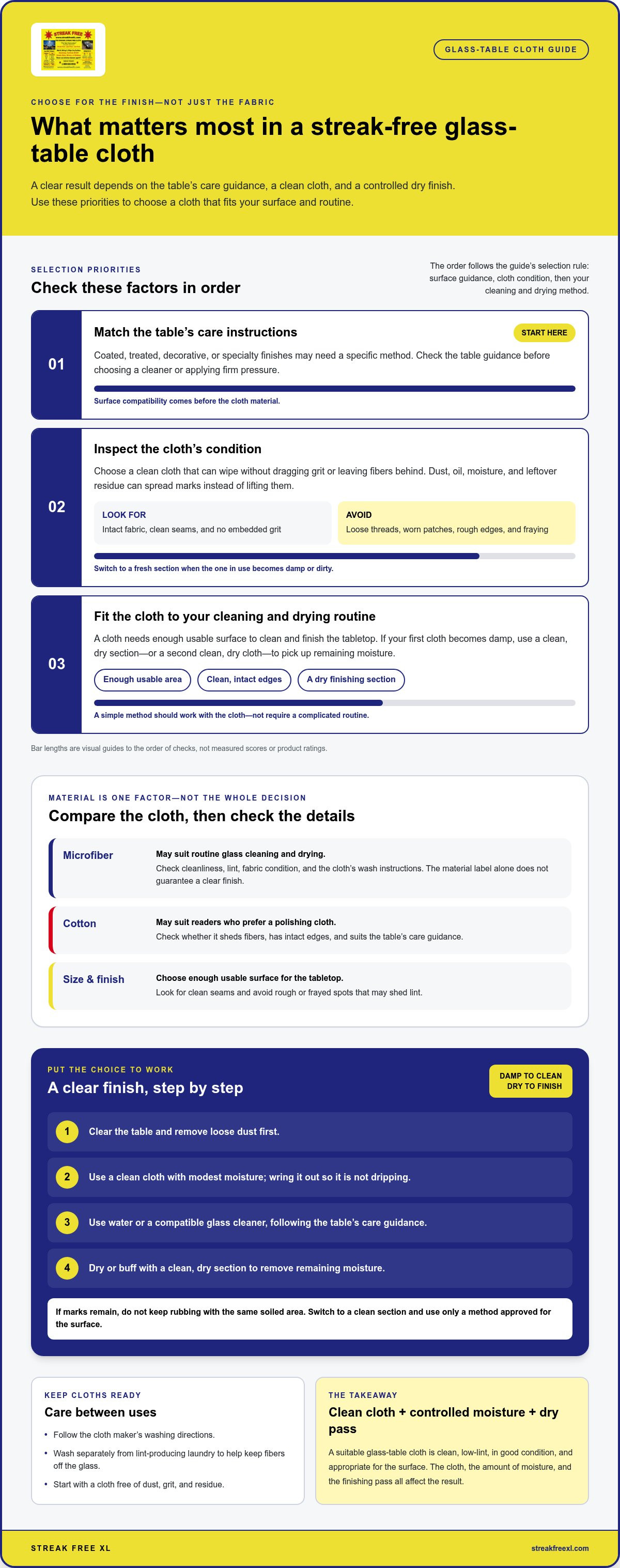
Selection rule: Choose a cloth based on your table’s care instructions, the cloth’s condition, and how you clean and dry the surface.
Microfiber or cotton: which cloth characteristics matter?
Microfiber is common in glass-cleaning cloth listings, but the material alone doesn’t guarantee a streak-free finish. Check that the fabric is intact, clean, and suitable for the job. A cotton polishing cloth may fit your preferences and routine, too, provided it doesn’t leave lint. For either material, follow the table’s care guidance and the cloth maker’s washing directions.
| Material or feature | May suit | Check before choosing |
|---|---|---|
| Microfiber | Routine glass cleaning and drying | Cleanliness, lint, fabric condition, and wash instructions |
| Cotton | Readers who prefer a polishing cloth | Whether it sheds fibers, has intact edges, and suits the table’s care guidance |
| Cloth size and finish | Covering the tabletop without repeated handling | Enough usable surface area, clean seams, and no rough or frayed spots |
For broader material-selection criteria, see this guide to commercial-grade cleaning cloths. The same practical checks can help you compare cloths for everyday home use.
When does a separate drying cloth make sense?
A second, clean, dry cloth can pick up moisture left after wiping, especially if the first cloth has become damp or you’re cleaning a large tabletop. If you prefer one cloth, switch to a dry section that’s still clean and absorbent. The best approach depends on the cloth and your technique. For more technique ideas, Tricks to Cleaning Windows and Mirrors offers related glass-cleaning guidance.
For reusable household textiles, compare Streakfree towels and Magic cleaning cloths with your surface-care needs and washing routine. A suitable streak free cloth for glass tables should work with your method, not require a complicated one.
Do You Need Special Glass Cleaner for a Streak-Free Table?
Not always. For light dust or routine marks, a clean cloth dampened with water may be enough. A compatible glass cleaner may help with oily fingerprints or stubborn residue. The right choice depends on the cloth, the type of soil, the water, and the surface finish. Start with the table maker’s care instructions, especially if the glass is coated, treated, or part of a specialty finish.
When can water-only cleaning be enough?
For ordinary dust or light marks, try a slightly damp, clean cloth if the table’s care directions allow it. The cloth should be damp, not dripping, so it doesn’t leave puddles to dry unevenly. If marks remain, don’t keep rubbing them with the same soiled area. Switch to a clean section and consider whether the surface needs a different approved method.
Water-only cleaning is an option, not a guarantee. The water itself, the cloth’s cleanliness, and the type of mark all affect the finish. Greasy spills or delicate surfaces may need a different approach. Follow the table instructions rather than assuming a streak free cloth for glass tables can handle every mess on its own.
When should you use a compatible glass cleaner?
For oily fingerprints or residue that water doesn’t lift, use a glass cleaner only if it’s appropriate for your table. Follow the product label and the table maker’s guidance, and don’t apply more than directed. Excess product can be harder to remove evenly and may leave a film, especially if the cloth is already damp or dirty.
Coated, treated, decorative, and food-contact surfaces may have specific care directions. Don’t assume a cleaner labeled for glass is suitable for every finish or every part of the table. Follow the surface instructions if they specify a particular method.
- Water and a clean cloth: A simple option for light dust and routine marks when the table instructions permit it. It may not lift oily or stubborn soil.
- Compatible glass cleaner: May help with tougher marks when the surface allows it. Too much cleaner or an unsuitable product can leave residue or affect a finish.
Whichever option you choose, a clean cloth and controlled moisture still matter. Cleaner can help loosen grime, but it won’t compensate for a cloth carrying old residue. Follow the surface and product directions, then use a clean, dry section to remove remaining moisture if appropriate.
How to Clean a Glass Table Without Leaving Streaks
A repeatable routine works better than extra scrubbing. Start with a clean cloth, follow the table’s care instructions, and give the drying pass as much attention as the wipe-down. Removing loose grit first helps prevent particles from dragging across the glass, while drying helps prevent moisture from forming visible patches.
A simple step-by-step glass table cleaning routine
- Clear the surface. Move dishes, decorations, and other objects off the table so you can clean the full top without wiping around obstacles.
- Remove loose dust and grit. Lift it with a clean, dry cloth before adding moisture. This reduces the chance of dragging particles across the glass.
- Clean with controlled moisture. Dampen a clean cloth, then wring it firmly over a sink. It should feel evenly damp, not drip when held up or leave drops when pressed. Use a cleaner only if the table’s instructions allow it, and work across the surface in manageable sections.
- Dry or buff the glass. Turn to a fresh, dry section of the cloth or use a separate clean cloth. Wipe away remaining moisture, paying attention to edges and corners where water can collect.
- Check the finish. Look across the tabletop in good light. If you spot a streak, make a light pass with a clean, dry area rather than immediately adding more cleaner.
This routine gives a streak free cloth for glass tables a clear job at each stage: remove loose dust, clean the surface, then pick up remaining moisture. A similar wet-and-dry approach appears in this guide to a streak-free car window cloth, though the table’s finish and care instructions should guide its own cleaning routine.
What to do when streaks remain
Pause before reaching for more product. A streak may mean there’s cleaner residue, the cloth is too wet, or the fabric has picked up dirt and needs washing. Switch to a clean section, reduce the moisture, and make a gentle pass. If the cloth feels saturated, use a fresh, dry one to finish.
Avoid abrasive pads and rough materials. They may damage glass or a treated finish, and vigorous rubbing can spread residue instead of removing it. If the marks persist, return to the table’s care guidance and check that the cleaner and cloth are suitable for the surface.
For a reusable cloth for household cleaning, explore cleaning cloth options and choose one that fits your table-care instructions and cleaning method.
Choose and Care for a Glass Table Cloth That Fits Your Routine
A suitable glass-cleaning cloth should be easy to keep clean, large enough to use comfortably, and appropriate for your table’s care instructions. Use this checklist when choosing one:
- Cleanliness: Start with a freshly washed cloth, not one used for greasy spills or other messy jobs.
- Lint and condition: Check for loose fibers, frayed edges, rough patches, or grit caught in the fabric.
- Size: Pick a size that lets you use a fresh section as you work across the tabletop.
- Care instructions: Make sure the cloth’s washing directions fit the way you care for household textiles.
- Intended use: Match the cloth to your routine, whether you need it for light dusting, damp cleaning, or a final dry buff.
These practical checks matter more than a label alone. A streak free cloth for glass tables should be clean and in good condition before it touches the surface. Washing it separately from lint-producing items may help reduce transferred fibers, especially if you’ve noticed fuzz on the glass after laundry.
How should you wash and store a glass cleaning cloth?
Follow the cloth maker’s care label; fabrics may have different washing and drying instructions. Keep used, damp cloths apart from clean ones to avoid transferring dirt and odor. After washing, let each cloth dry fully and store it somewhere clean and dry. That way, it’s ready for the next wipe or final buff instead of picking up dust in a laundry pile.
Which Streak Free XL cloth option fits your cleaning routine?
Streakfree towels and Magic cleaning cloths are part of the Streak Free XL range of household cleaning textiles. Compare them with your table-care instructions and your usual routine: which cloth you’ll keep clean, how you’ll wash it, and whether you prefer a separate dry pass. Choose a reusable cloth that fits those everyday needs rather than relying on a product name alone to predict the finish.
This microfiber towel bulk pack guide covers choosing a useful mix and quantity. To find a cloth for your household cleaning routine, explore Streak Free XL cleaning cloths.
Make Your Next Glass-Table Clean Count
A clear glass tabletop comes down to a few simple choices: use a clean, low-lint cloth, match your method to the table’s care instructions, and finish with a dry section or cloth. Water may be enough for light dust, while a compatible glass cleaner can help with tougher marks. Either way, excess moisture, residue, or a dirty cloth can leave smears behind.
Choose a streak free cloth for glass tables that fits your routine, and keep it clean, dry, and ready for the next wipe. Streak Free XL offers household cleaning textiles, including Streakfree towels and Magic cleaning cloths.
Ready to find a reusable cloth for your home? Explore Streak Free XL cleaning cloths and choose an option that suits your routine.
Frequently Asked Questions
What is the best cloth for a glass table?
There’s no single cloth that suits every glass table and cleaning routine. For a streak free cloth for glass tables, look for clean, low-lint fabric with intact edges and care instructions that fit your tabletop. Microfiber is common in glass-cleaning cloths; cotton polishing cloths are another option. Follow the table maker’s guidance, and use a clean, dry section or separate cloth for the finishing pass.
Can you clean a glass table with a microfiber cloth?
Yes, a clean microfiber cloth can suit many everyday glass-cleaning routines, but check the table’s care instructions first. Remove loose grit before wiping so particles don’t drag across the surface. Use controlled moisture, then finish with a clean, dry section. If the cloth is dirty, worn, or carrying lint, it may spread marks instead of lifting them. Results can vary by surface finish.
Do you need glass cleaner to get a streak-free table?
No, glass cleaner isn’t always needed. A lightly damp cloth may lift everyday marks, while oily residue may call for a compatible glass cleaner used as directed. The best choice depends on the surface, the mess, and the cloth. Follow the table maker’s care guidance, avoid using more product than directed, and test an unfamiliar method on a small, inconspicuous area when appropriate.
How do you clean a glass table without streaks?
Clear the tabletop, then remove loose dust and grit before wiping. Use a clean cloth with controlled moisture, following the table’s care instructions. Don’t soak the surface or apply more cleaner than directed. Finish with a dry, clean section of cloth or a separate dry cloth, and check the glass in good light. If the cloth leaves lint or spreads residue, stop and wash it before using it again.
Why does my glass table still look streaky after cleaning?
Streaks can remain if cleaner residue, fingerprints, or excess moisture is spread across the glass. A cloth that’s dirty or saturated can also leave marks instead of removing them. Try a clean cloth and less moisture, then finish with a dry pass. If the table has a coating, film, or decorative finish, follow its care instructions rather than repeating a general glass-cleaning method.
Can a glass table cleaning cloth scratch the surface?
A clean, suitable cloth is generally gentler than an abrasive pad, but grit trapped in fabric can rub against the surface. Remove loose particles before wiping, and don’t use a cloth that feels rough or contains debris. Check the table maker’s instructions, especially for coated, filmed, or decorative glass. If you’re trying an unfamiliar method, test it discreetly first, when appropriate.
How often should you wash a cloth used on a glass table?
Wash the cloth when it looks dirty, feels greasy, carries lint, or starts spreading marks instead of lifting them. Follow its care label, since washing instructions can differ by fabric. Keep used cloths separate from clean ones, and let them dry fully before storing. Starting each glass-cleaning session with a clean cloth helps avoid transferring old residue, dust, or fibers onto the tabletop.