More cleaner isn’t the secret to clear glass. The final wipe matters just as much. If your windows or mirrors look cloudy or striped after cleaning, learning how to get streak free glass starts with removing residue, not spraying again and again.
It’s frustrating to wipe a pane, step back, and see fresh marks when the light shifts. Leftover cleaner, hard-water minerals, lint, a dirty cloth, or cleaning in direct sun can all contribute. A few practical changes can help you get a clearer finish with fewer repeat passes.
This guide walks you through a straightforward glass-cleaning routine, from preparing the surface to choosing a suitable cloth and making the final wipe. You’ll also learn how to identify common marks and make reusable cleaning textiles, including Streak Free XL towels, part of your routine. Clear glass starts with the right sequence and a clean cloth. Let’s get into it.
Key Takeaways
- For how to get streak free glass, follow a simple sequence: remove dust, add modest moisture, wipe, then inspect the dry finish.
- Match your cloth to the job, and remember that cleaning products and cloths have different roles.
- When marks remain, identify whether you’re seeing a soil spot, haze, or lint so you can redo only the area that needs attention.
- Keep a clean cloth ready and control moisture to make your glass-cleaning routine easier to repeat.
- Care for reusable cloths according to their washing and drying guidance to help prevent residue from affecting the next clean.
Why Does Glass Look Streaky After Cleaning? Start by Finding the Cause
Streaks are visible marks or a hazy film left on glass after it dries. They can come from leftover cleaner, loosened soil, lint, or excess moisture, and several causes may be at work at once. So another full wipe isn’t always the answer. Look closely first: is the mark a smear, a fiber, or dirt that never came off?
A fingerprint or small soil spot usually has a distinct shape or edge. Broad haze or repeated lines may point to residue or the wiping method. Hard-water minerals can also remain after water evaporates. Identifying the mark helps you choose a targeted fix instead of re-cleaning the whole pane.
How residue and leftover moisture leave visible marks
Too much cleaner can leave a thin film, particularly when it mixes with loosened dust or grime and gets spread across the glass. Water can leave marks too if minerals remain as it dries. Excess moisture takes longer to remove and can make an even finish harder to achieve.
Uneven patches often become more visible as the surface dries. One section may look different from another if it stayed wet longer or was wiped differently. Repeating the same stroke with a soiled cloth can make the problem worse by moving residue around instead of lifting it away. Before wiping again, check the cloth and switch to a clean section or a fresh cloth if it has picked up dirt.
The broader window cleaning techniques used for glass reflect a useful principle: both the tool and the wiping method affect the result. More pressure or more product won’t necessarily remove a film that has already been spread across the surface.
Why the cloth and cleaning conditions matter
A cloth can leave marks of its own. Loose lint appears as fine fibers, while a damp or dirty cloth may drag soil and moisture across the glass. Even fabric that looks clean can hold residue from earlier cleaning. Check it before you start, and use a clean section if it becomes visibly soiled.
Lighting can make a nearly clean pane look less forgiving. Strong direct light reveals smears, wipe lines, and spots that are easy to miss in softer light. It may simply make existing marks more noticeable rather than cause them. If you’re unsure, view the glass from a different angle before doing another pass.
For how to get streak free glass, treat each mark as a clue, not a reason to keep scrubbing. A defined fingerprint calls for attention to that spot. Broad haze suggests checking for residue or excess moisture. Fine fibers point back to the cloth. Identify the likely cause first, then follow the cleaning sequence below to avoid repeating an unsuccessful wipe.
How to Get Streak-Free Glass: Follow This Cleaning Sequence
Give each step a specific job when cleaning glass with water: remove loose dust, use a little moisture to loosen marks, wipe them away, then make a separate dry pass if needed. This order helps prevent dirt from spreading and reduces the amount of leftover water to remove.
Prepare the glass and cloth before wiping
Start with a clean cloth that’s suitable for glass. Follow its care guidance, since residue left on the fabric can transfer to the surface. If the cloth feels dirty or leaves fibers behind, switch to a clean one. Remove loose dust before dampening the glass so it doesn’t turn into smears during the wipe.
Use water sparingly. The cloth should be slightly damp, not dripping. Too much liquid can run down the pane or leave more moisture to remove during the finishing pass. For a small fingerprint, dampen only the area you need to clean. For a larger pane, work in sections so you can wipe each one before it dries on its own.
Wipe methodically, then check the finish
Follow this sequence:
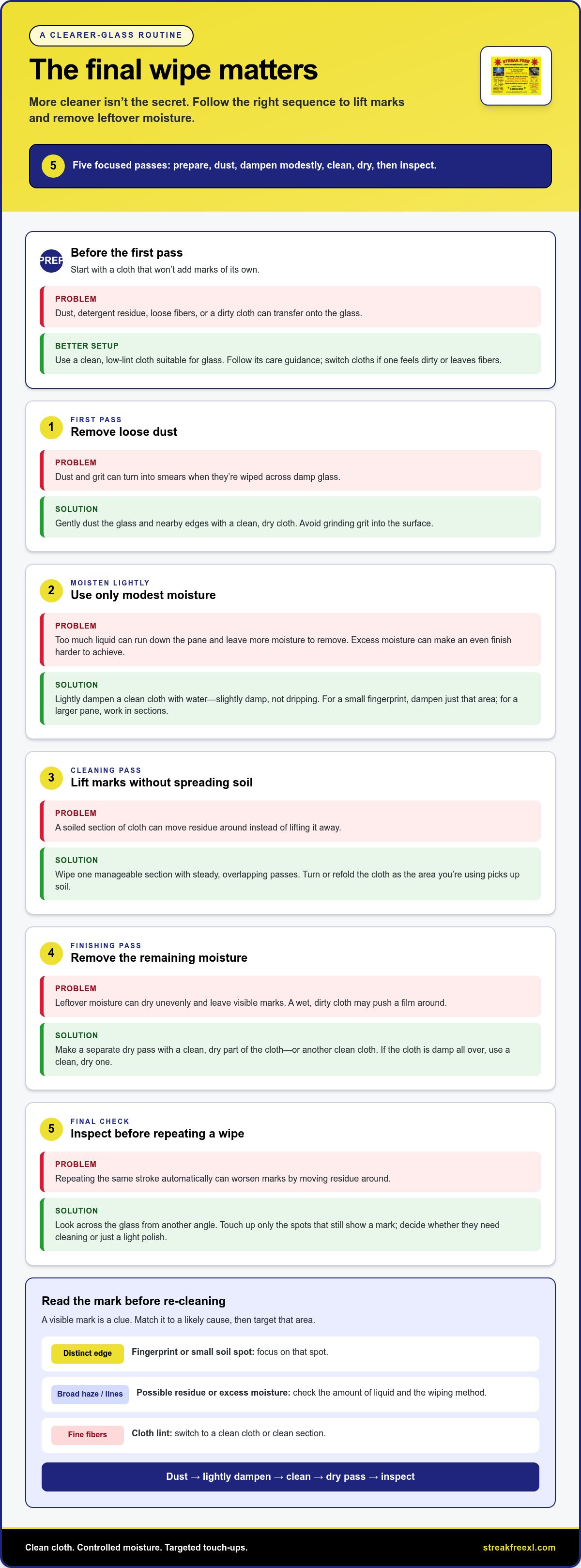
- Remove loose dust. Gently dust the glass and nearby edges with a clean, dry cloth. Avoid grinding grit into the surface.
- Add modest moisture. Lightly dampen a clean cloth with water. Don’t soak the glass.
- Clean the marks. Wipe one manageable section with steady, overlapping passes. Turn or refold the cloth as the area you’re using picks up soil.
- Make a dry finishing pass. Use a clean, dry part of the cloth, or another clean cloth, to remove remaining moisture and lightly polish the area.
- Inspect before stopping. Look across the glass from another angle. Touch up only the spots that still show a mark.
Keep the cleaning pass and the finishing pass separate. The damp pass lifts fingerprints and everyday soil. The dry pass removes leftover moisture; it shouldn’t push a wet, dirty film around. If the cloth becomes damp all over, use a clean, dry cloth for finishing.
That’s a practical routine for how to get streak free glass using only water. Don’t repeat the same stroke automatically. Check the surface and decide whether it needs more cleaning or just a light polish. A reusable glass-cleaning cloth can make the routine easy to repeat. See reusable cleaning cloths as one option for your glass-care kit.
Which Cloth and Glass-Cleaning Method Should You Use?
The cloth and cleaning method have different jobs. Water or a cleaner can help loosen soil; the cloth lifts it away and manages remaining moisture. Neither can compensate for a dirty cloth or a wiping method that spreads residue. Choose according to the kind of mark, the glass surface, and its care instructions.
What to look for in a glass-cleaning cloth
Choose a cloth that’s clean, low-lint, and suitable for glass. Its condition matters: dust, detergent residue, or loose fibers from previous use can transfer to the pane. Follow the cloth’s washing and drying guidance, and set aside any cloth that feels greasy or leaves lint. Streakfree towels are one reusable option for a glass-cleaning routine.
One cloth may not suit every surface or situation. Vehicle windows can have specific care directions, so follow the vehicle manufacturer’s guidance. A focused article on streak-free car window cloths can also help you think through cloth choice for that task.
| Option | Role | Limitation to keep in mind |
|---|---|---|
| Reusable cloth | Lifts loosened soil and helps remove moisture during the finishing pass. | A dirty, damp, or lint-shedding cloth can leave marks; laundering and cloth condition matter. |
| Paper towel | Can absorb moisture or help with a small spot. | Some paper towels leave fibers or break down as they get wet, so check the finish. |
| Spray cleaner | Can help loosen grime when water alone isn’t enough. | Extra product may leave a film, and some glass surfaces require specific care. |
When to use water, cleaner, or a reusable cloth
For light dust or everyday marks, try a clean reusable cloth with modest moisture. If greasy fingerprints or stuck-on grime remain, an appropriate glass cleaner may help. Use only what the task calls for, then wipe it away as directed. Water alone may not remove every kind of soil, and cleaner isn’t automatically needed for every wipe-down.
Check the glass manufacturer’s care guidance, especially for treated, coated, tinted, or specialty glass. If you use a cleaner, follow its label and any surface-specific instructions. A product that works on an ordinary mirror isn’t necessarily right for every window.
For how to get streak free glass, think of the cloth as the tool that controls the wipe, not a replacement for good technique. Keep a clean section available, use a separate dry area for finishing when needed, and inspect the result before adding more product. Pairing the right method with a clean cloth is more useful than expecting one approach to work for every surface.
How to Fix Streaks and Haze Without Starting the Whole Job Again
If a mark remains, don’t automatically re-clean the whole pane. Diagnose it first, check your cloth, then correct only the area that needs attention. One extra pass may remove a small fingerprint, but broad haze or persistent marks can have a different cause. Match the fix to what you see.
Diagnose the mark before wiping again
View the glass from a different angle to make marks easier to locate. A distinct fingerprint or soil spot is usually isolated. A broad, cloudy film may indicate residue or moisture, while fine strands may be lint. Before reusing the cloth, check whether it’s visibly soiled or too wet to finish the job cleanly.
- One defined spot? Treat it as remaining soil or a fingerprint.
- Haze across a larger area? Consider whether residue or excess moisture has spread across the surface.
- Fine fibers or trails? Check the cloth and use a clean section before wiping again.
This quick check can save effort. A cloth that has picked up dirt may leave new marks, even if you wipe carefully. Refold it to expose a clean area, or switch to another clean cloth. If the cloth is saturated, don’t use it for the finishing pass. A clean, drier cloth can remove moisture without transferring the same soil back onto the glass.
Correct the cause with a targeted second pass
For a small fingerprint or missed spot, lightly dampen a clean section of cloth and wipe only that area. Then use a dry, clean section for a gentle finish if needed. For broader haze, revisit the affected area with a cleaning pass. If you used a cleaner, avoid adding more product without a reason.
If you’re cleaning with water, make sure the cloth is clean and only modestly damp. Work on the hazy portion, then check the glass from another angle. If the mark changes or disappears, stop there. If it remains, don’t keep scrubbing blindly. Persistent residue may need a different approach, or the cloth or cleaning method may not suit the surface.
Some glass has coatings or other specialty treatments. Follow the glass maker’s care guidance before trying another cleaner, cloth, or technique. A method that’s suitable for ordinary glass shouldn’t be assumed safe for every treated surface.
For targeted touch-ups, keep a clean reusable cloth ready. Reusable cleaning cloths are one option to add to your glass-care supplies.
Make Streak-Free Glass Easier with a Repeatable Cloth Routine
A clear finish is easier to repeat when you follow the same small routine each time: start with a clean cloth, use only the moisture the glass needs, and inspect the surface before you stop. If a mark remains, identify it before wiping again. This helps you avoid adding unnecessary water or carrying soil across a clean pane.
For how to get streak free glass with less guesswork, make cloth care part of the process. A reusable cloth is ready to help only when it’s clean and suitable for the job.
Keep the cloth ready for the next glass-cleaning job
Set used cloths apart from clean ones as soon as you finish. Even a cloth that looks mostly clean may have picked up dust, fingerprints, or cleaning residue. Using it again without washing or checking it can transfer that soil onto the next window or mirror.
Follow the care instructions for the specific cloth. Different textiles may have different washing and drying guidance, so don’t assume one routine suits every cloth. Avoid guessing at washing instructions. Once a cloth is clean and fully dry, store it separately from used cleaning materials so it’s ready for the next task.
- Keep clean cloths apart from those used for dusty or greasy jobs.
- Check the fabric before using it on glass. Set aside cloths that feel soiled or leave fibers behind.
- Wash and dry each cloth according to its product guidance, then store it clean and dry.
Choose a reusable option for your routine
Think about the glass you clean most often. A mirror touched by fingerprints may need a different amount of moisture than a large window that collects dust. Choose a reusable cloth that fits your routine, then test your method on a small area if you’re unsure how the surface will respond. Always follow the care guidance for specialty or treated glass.
Streakfree towels and the Ultimate cleaning cloth are among the reusable cleaning textiles available from Streak Free XL. They can fit into a repeatable glass-care routine alongside the habits that make a difference: keep the cloth clean, control moisture, and check the finish in good light before calling the job done. No cloth removes the need to use a method suited to the surface.
Explore Streak Free XL’s reusable cleaning textiles to choose a cloth for the glass-cleaning jobs you do regularly.
Make Your Next Glass Clean Easier
Turn your next clean into a repeatable habit. Keep a clean, dry cloth with your cleaning supplies, and set used cloths aside after each job. That simple setup makes it easier to start with a suitable tool instead of reaching for the nearest fabric and hoping for the best.
Once you know how to get streak free glass, you can adapt the routine to your home. Choose a reusable cloth that suits the glass you clean most often, and follow its care guidance so it’s ready for the next wipe. Streak Free XL specializes in cleaning textiles, including Streakfree towels and the Ultimate cleaning cloth.
Ready to add a reusable cloth to your glass-care routine? Explore Streak Free XL cleaning cloths and choose an option for your everyday cleaning tasks. A clear finish starts with a simple routine and a clean cloth.
Frequently Asked Questions
Can I get streak-free glass with water alone?
Yes, water alone can work for light dust or a fresh fingerprint, but it may not lift oily or stubborn grime. For how to get streak free glass with only water, try a small area first and see whether the mark lifts without heavy rubbing. If it smears, stop and use a cleaning method suitable for the surface. For coated glass, follow the maker’s care instructions before trying anything else.
Why does glass look streaky after it dries?
Marks can become visible as glass dries because something remains on the surface, such as soil, cleaner, lint, or minerals from water. The pattern offers a clue: a single cloudy patch may need different attention from fine lines or scattered spots. Check the pane once it’s dry and view it from another angle to distinguish a remaining mark from reflections or glare.
Is it better to clean glass in direct sunlight?
It’s usually easier to clean when strong sunlight isn’t shining directly on the glass. Bright light can make it harder to see what still needs attention while you work, and faster drying may leave less time to finish evenly. If the sun is hitting one window, try another shaded pane first. Then check the cleaned glass from a different angle before moving on.
Can hard water leave spots on glass?
Yes, minerals in water can leave visible spots after droplets dry. You may notice them on shower glass or a window regularly hit by sprinklers. Don’t assume every spot is ordinary dirt, and avoid scraping or abrasive methods that could damage the surface. If spots persist after routine cleaning, check the glass maker’s guidance, especially for coated or specialty glass.
Are paper towels a good choice for cleaning glass?
They can be handy for a quick spill, but paper towels aren’t always the best choice for finishing a pane. Different brands and types can behave differently, so test yours on a small area and check for fibers before using it across a large window. For a mirror or glass table, a clean reusable cloth is another option for a consistent routine.
How often should I wash a glass-cleaning cloth?
Wash it when it picks up oily soil, looks dirty, or starts leaving marks. After cleaning a greasy kitchen window, for example, don’t put that cloth straight back with the clean ones. Follow the care guidance for that textile, and make sure it’s fully dry before storing it. Avoid fabric softener, which can leave residue on cloth fibers and transfer it to glass.