What if the fastest way to dry your boat isn’t wiping harder? The quickest safe approach to how to dry a boat fast is to work in sequence: clear pooled water, absorb what remains, then let trapped moisture air out. Water can linger around fittings and in cockpit seams, while sun and wind can leave spots on the hull and streaks on glass. A quick pass with the wrong tool may make those marks worse.
It’s frustrating to finish washing and still see beads, drips, and cloudy patches. This guide walks you through a practical drying routine for the exterior, cockpit, and windows, with pointers for matching tools to surfaces. You’ll learn where a squeegee or other suitable water-shedding tool can move standing water, where a careful towel wipe makes sense, and how a Streak Free XL towel can fit into the final pass. We’ll also cover when moisture in carpets, compartments, or the bilge calls for airflow and further attention, rather than another wipe over the outside. The goal is less lingering water, fewer visible marks, and a boat that’s ready for what comes next.
Key Takeaways
- For how to dry a boat fast, follow a simple sequence: clear pooled water, wipe remaining moisture, then allow airflow.
- Dry in the shade when practical to help limit uneven drying and mineral spots on visible surfaces.
- Choose water-shedding tools, cloths, and airflow based on the area, and clear loose grit before wiping.
- Work across broad surfaces first, then tackle cockpit seams, fittings, and glass with a careful final wipe.
- Routine drying handles visible water, but moisture that suggests a leak or deeper issue needs attention beyond an exterior wipe.
How to Dry a Boat Fast After Washing or Rain
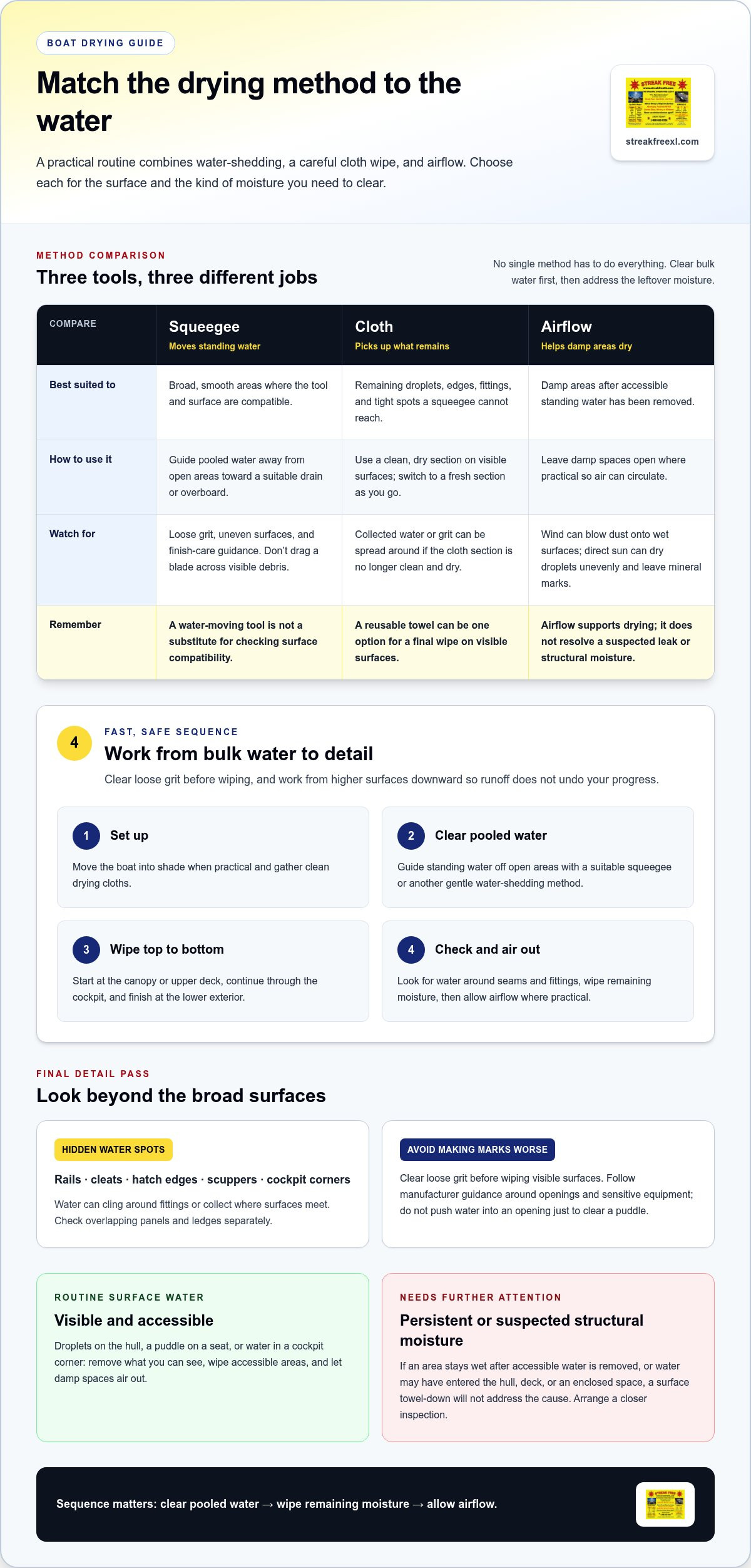
The fast, safe sequence is simple: remove pooled water first, wipe away the remaining moisture, then let airflow reach damp areas. For how to dry a boat fast, don’t start by dragging a towel over every surface. Clear loose grit first, and work from the highest surfaces downward so runoff doesn’t undo your progress.
Use this quick order:
- Move the boat into shade when practical and gather clean drying cloths.
- Guide standing water off open areas with a suitable squeegee or another gentle water-shedding method.
- Wipe visible surfaces from the canopy or upper deck down toward the cockpit and lower exterior.
- Check seams, fittings, and other pockets for trapped water, then leave areas open to airflow where practical.
What to do first when the boat is still wet
Start by getting out of direct sun if you can. Droplets on a hot, exposed surface can dry unevenly and leave mineral marks. Next, move loose standing water without pressing grit across the finish. The outer Gelcoat surface is visible and exposed, so keeping debris out of your wipe-down helps reduce the chance of scratching it.
Clear the open areas before reaching for a cloth. Sweep water from seats, ledges, and broad deck areas toward a suitable drain or overboard, taking care not to direct it into places where it can collect. This removes the bulk water first. Then use a clean, dry cloth to pick up remaining moisture. A Streakfree towel can be part of that routine; use a fresh, clean section as you move across visible surfaces.
A fast top-to-bottom drying order
Work in sections. Begin with the canopy or upper deck, then move into the cockpit, and finish with the lower exterior. This keeps drips from running onto areas you’ve already dried. On glass and other noticeable surfaces, use a clean, dry section of cloth rather than spreading collected water around.
Make one final detail pass. Look along seat edges, seams, fittings, and ledges where water can hide after the broad surfaces look dry. Blot or wipe away any remaining moisture, then allow air to circulate through damp areas. There’s no reliable one-size-fits-all drying time: weather, boat size, and surface layout all affect how quickly water clears. Focus on the sequence, not a fixed time promise.
Why Boat Surfaces Stay Wet: Water, Sun, Wind, and Hidden Pockets
Surface drying means removing visible water from accessible exterior and cockpit surfaces. It’s different from drying moisture inside the boat’s structure. A deck may look nearly dry while droplets remain around fittings, and a quick towel-down can’t reveal or resolve water that has entered a core or enclosed space.
Sun and wind can help, but they can also make drying less straightforward. Direct sun can dry exposed droplets unevenly, leaving mineral spots behind. Wind moves air across damp areas, but it can also blow dust onto a wet surface. If the boat is exposed, work in manageable sections and use a clean cloth on visible areas rather than letting airborne grit settle and then wiping it around.
Where water hides on a boat
Give extra attention to rails, cleats, hatch edges, scuppers, and cockpit corners. Water can cling around fittings or collect where surfaces meet. Check overlapping panels and ledges separately, even after broad areas look dry. Follow the boat manufacturer’s guidance around openings and sensitive equipment; don’t push water into an opening just to clear a puddle.
Drying also connects to responsible boating. The U.S. Fish & Wildlife Service explains the Clean, Drain, Dry approach to help prevent the spread of aquatic invasive species. After time on the water, pay attention to water and material caught around the boat and its equipment, especially before moving between water bodies.
Surface water or a deeper moisture problem?
Ordinary droplets on the hull, a puddle on a seat, or water in a cockpit corner are routine surface-drying concerns. Remove what you can see, wipe accessible areas, and let damp spaces air out. A reusable cloth, such as a Streakfree towel, can be one option for a final wipe on visible surfaces.
Persistent dampness is a different signal. If an area stays wet after accessible water is removed, or you suspect water has entered the hull, deck, or another enclosed structure, a surface towel-down won’t address the cause. Arrange a closer inspection and treat structural moisture concerns separately from routine drying. Knowing the difference is part of how to dry a boat fast without mistaking a deeper issue for a few lingering beads.
Which Boat-Drying Method Is Fastest Without Scratching or Streaking?
The fastest method depends on the surface and how much water you need to move. A squeegee can clear broad, smooth areas quickly. A cloth picks up leftover droplets and reaches tight spots. Airflow helps damp areas dry after standing water is gone. The most practical routine often combines all three, rather than asking one tool to do every job. Boating Magazine’s overview of tools for drying your boat also covers options such as squeegees, towels, and blowers.
Squeegee, towel, or airflow: when each helps
Use a suitable squeegee on a broad, smooth area only when the tool and surface are compatible. Follow the boat manufacturer’s care guidance, and don’t drag a blade over visible grit or an uneven surface. A squeegee moves water; it isn’t a substitute for checking whether a finish can handle it.
An absorbent cloth is useful for remaining droplets, edges, fittings, and places a squeegee can’t reach. Keep a clean, dry section available for the final wipe. A Streakfree towel can be one reusable option in that routine, but choose and use any cloth according to the surface’s care instructions. Once pooled water is removed, airflow can help remaining dampness evaporate, including in areas where a towel can’t easily reach.
How to dry without scratching or leaving marks
Speed should never mean wiping grit across a finish. Rinse or gently remove loose debris before using a cloth. Then use light pressure and turn to a clean section as the cloth picks up water or dirt. If a cloth becomes visibly soiled, switch to a clean one instead of carrying residue from one area to another.
Glass needs a particularly clean finishing pass. Use a cloth intended for the task and follow its care directions; avoid transferring grime from a deck or fitting onto a window. For more on choosing a cloth for car glass, see our guide to choosing a streak-free car window cloth. The same basic principle applies on a boat: keep the cloth clean and use a gentle touch.
So, how to dry a boat fast without marks? Move bulk water with a compatible tool, pick up what remains with a clean cloth, then let air reach damp areas. For a reusable cloth in your drying kit, explore Streakfree towels as one part of the routine. No tool replaces surface-specific care, but the right sequence gets water off efficiently without rushing the finish.
The Step-by-Step Boat Drying Routine for Deck, Cockpit, Hull, and Glass
Use the same top-to-bottom routine after a wash, rain, or a wet day afloat. Set out clean cloths first, then work in sections so drips from higher areas don’t undo a finished wipe-down. Keep tools and water away from openings and equipment areas, and follow the boat manufacturer’s care instructions for sensitive surfaces.
- Clear pooled water from broad deck areas toward suitable drainage.
- Wipe the deck and cockpit, moving from higher surfaces to lower ones.
- Dry the hull and fittings, then give glass its own clean-cloth pass.
- Inspect seams, edges, and shaded spots for drips that have returned.
Dry the deck and cockpit efficiently
Start with open, accessible deck surfaces. Remove standing water using a method suited to the surface, guiding it toward a suitable drain rather than into a hatch, fitting, or equipment area. Don’t force water into openings. Once the broad areas are clear, turn to seating, ledges, and the cockpit, where water often gathers at edges and corners.
Use an appropriate clean cloth and a light touch on seating and control-area surfaces. Work one area at a time, turning to a clean section as it becomes damp or picks up residue. This keeps the wipe-down tidy without carrying dirt from the deck onto seats or controls. If a spot is difficult to reach safely, don’t press a tool into a gap; follow the manufacturer’s guidance for that area.
Finish the hull, fittings, and glass
Move to the hull and its details. Handles, fittings, and edges can hold small droplets after the broad surface appears dry, so check around them instead of making repeated passes over the whole hull. Use a clean section of cloth to lift remaining moisture, and take care not to drag visible grit across the finish.
Give glass a separate, clean-cloth pass. A cloth used on a deck or fitting may transfer dirt or residue and leave marks. Finish by looking along shaded edges and seams; water can trickle out after your first pass and spot an area you’ve already dried. A quick final check catches those returning drips before you put the cloth away.
For the final wipe-down, a suitable reusable towel can be one tool in the routine. Explore Streak Free XL towels as an option for your boat-care kit. The key to how to dry a boat fast is keeping the order simple: broad areas first, details next, and a final inspection last.
Keep Your Boat Dry Longer and Know When to Stop
A good drying routine ends with a quick check, not endless wiping. If you’ve removed accessible water and the remaining damp areas are drying with airflow, routine surface care may be all that’s needed. Dry in the shade when feasible, and store clean cloths dry between uses so they’re ready for the next cleanup.
Simple habits that reduce repeat work
Remove standing water promptly rather than leaving droplets to dry unevenly in direct sun. Keep clean cloth sections available for glass, and use a separate area or another clean cloth for dirtier exterior surfaces. That way, you’re less likely to transfer residue onto glass or a freshly wiped finish. Follow the care instructions for the boat’s materials and for any drying tools you use.
Before calling the job done, run through this short checklist:
- Glass: Check for streaks or droplets and use a clean cloth section for touch-ups.
- Fittings: Look around handles, cleats, and other spots where water can collect.
- Seams and edges: Check for moisture or drips that have surfaced after the first pass.
- Cockpit and drainage: Look for pooled water and make sure accessible areas are clear.
When a quick drying routine is not enough
Surface drying has a clear limit. It removes visible water from accessible areas; it doesn’t repair a leak or dry moisture that may have entered an enclosed or structural area. If dampness persists after surface water is removed, or you suspect water is getting into the boat, investigate further rather than repeatedly wiping the same spot. Appearance alone can’t confirm structural damage, so don’t treat a towel-down as a diagnosis.
Knowing when to stop is part of how to dry a boat fast: finish the visible surfaces, check the usual collection points, and allow airflow where needed. A suitable reusable towel can make that final wipe-down simpler as part of the routine. Find a towel for your next boat cleanup.
Make Your Next Boat Dry-Down Easier
The simple answer to how to dry a boat fast: move pooled water first, wipe visible surfaces gently with a clean cloth, then let airflow reach damp spots. Work from top to bottom, and save a final check for glass, fittings, seams, and cockpit corners where drips can return.
Keep the routine practical. Shade can help limit uneven drying, while clean cloth sections help reduce streaks and prevent dirt from traveling between surfaces. Persistent dampness or suspected water entry needs more attention than an exterior wipe-down.
For that final pass, a suitable reusable towel can be a handy part of your boat-care kit. Streak Free XL offers specialized cleaning textiles, including Streakfree towels and Magic cleaning cloths. Explore Streak Free XL towels and choose a cloth for your next cleanup. A clear sequence and clean tools make drying simpler, so you can get back to enjoying the boat.
Frequently Asked Questions
How can I dry a boat quickly after washing?
To dry a boat quickly, remove standing water first, then work from upper surfaces downward with a suitable squeegee or clean, absorbent cloth. Use light pressure and switch to a dry cloth section as it becomes damp. Check fittings, seams, and cockpit corners for water left behind. Working in shade can help limit uneven drying and spotting. Follow care guidance for your boat’s finish and equipment.
Can I use a microfiber towel to dry my boat?
A clean microfiber towel may help pick up remaining droplets from surfaces it’s suitable for. First rinse or remove loose grit so it won’t be dragged across the finish. Use a separate clean section for glass or dirtier areas, and follow the care instructions for both the boat surface and towel. Don’t assume every towel weave is appropriate for every marine finish; use gentle pressure and stop if the cloth catches debris.
How do I dry a boat without leaving water spots?
Remove standing water before droplets evaporate unevenly, and dry broad surfaces in manageable sections. Use shade when practical. Work with a clean cloth, turning to a fresh section as it becomes damp or dirty, and check edges for drips after the main wipe. Water sources can leave different amounts of mineral residue, so no single tool or technique can guarantee a spot-free result. Prompt, careful drying helps reduce visible marks.
Is it safe to use a squeegee on a boat?
A squeegee can be useful on a smooth surface that’s compatible with the tool, but check the boat maker’s care guidance first. Remove loose grit, use gentle pressure, and stop if the blade catches or drags debris. Avoid squeegees on textured, delicate, or manufacturer-restricted finishes. If you’re unsure about the surface, a clean, soft cloth and light touch are a cautious alternative for removing remaining moisture.
What happens if water stays trapped in boat seams or fittings?
A small amount of water around a seam or fitting may need a careful second pass with a cloth and a visual check. If dampness persists after accessible surface water is gone, or you suspect water is entering the boat’s structure, a towel-down won’t address the source. Investigate further and follow appropriate maintenance guidance. Don’t assume that persistent moisture proves structural damage, but don’t mistake it for ordinary droplets either.
Can I dry my boat in direct sunlight?
You can dry a boat in direct sunlight, but exposed droplets may evaporate unevenly and leave visible spots. If shade is available, use it; otherwise, work on manageable sections and remove standing water promptly. Finish with a clean cloth, turning to a dry section as needed. Sun exposure doesn’t change the need to follow the manufacturer’s instructions for the boat’s finish, equipment, and any care products used.
How do I dry boat windows without streaks?
Remove loose dirt first, then wipe the glass with a clean cloth or suitable glass tool using light, even strokes. Don’t reuse a damp or dirty section that could spread residue. Check window edges for drips after the main wipe, since runoff can leave fresh marks. For related advice on glass care, see the article on choosing a streak-free car window cloth; use the same clean-cloth principle on compatible boat glass.