What if the best towel to dry car without spots still leaves water marks behind? It can happen when minerals in leftover water dry on the paint, or when a towel spreads water instead of lifting it away. And if you’re concerned about dragging fabric across your finish, absorbency isn’t the only thing to consider.
Spots are frustrating, especially after a wash that looked perfect. The good news is that you don’t need guesswork or heavy pressure. A suitable drying towel, a well-rinsed surface, and a gentle method can help reduce marks while treating your paint carefully.
This guide covers a repeatable drying sequence, from the final rinse and towel choice to the first pass across the car. You’ll learn what to check in a towel’s material, size, absorbency, and condition, how to use a light lay-and-glide motion, and how to care for microfiber. By the end, you’ll have a practical way to choose a towel and dry with more confidence.
Key Takeaways
- The best towel to dry car without spots is only part of the solution; preparation and timing also affect the finish.
- Check towels for absorbency, softness, cleanliness, condition, and ease of handling before using one on your car.
- Dry from the roof downward, leaving lower, dirt-prone panels until last to help avoid transferring grime.
- Use a light lay-and-glide or blotting motion instead of pressing hard or scrubbing the paint.
- Follow the towel maker’s care label, and consider Streak Free XL towels as one option.
Why the Best Towel to Dry a Car Without Spots Is Only Part of the Answer
Start with a clean, absorbent towel that’s suitable for painted surfaces. The best towel to dry car without spots can lift water efficiently, but it can’t correct an incomplete rinse or remove residue that has already dried onto the finish. A clean result depends on several steps: rinsing away dirt and soap, drying promptly, and using a gentle, orderly technique.
Water spots are visible marks left when droplets evaporate and dissolved minerals remain on the surface. They may look like pale rings or specks, but not every mark is a water spot. Soap residue can leave a hazy film, dirt can smear into streaks, and towel lint can leave tiny fibers behind. Appearance can offer clues, but it doesn’t confirm the cause on its own.
What causes water spots after washing a car?
Minerals in rinse water are one possible cause, especially if droplets dry before you wipe them away. Leftover wash product can leave a film, while dirt that wasn’t fully rinsed may show up as smears or patches. These marks can look similar at a glance, so don’t assume every spot is hard-water damage. Check the surface and consider how the car was rinsed and dried.
The towel affects both what touches the paint and how well it picks up leftover water. For example, microfiber towels are made from fine synthetic fibers, commonly polyester and polyamide. Whatever type you choose, check that it’s clean and in good condition before use. Trapped grit can scratch, while lint may leave fibers that look like fresh residue.
Can the right towel prevent every spot?
No towel can guarantee a spot-free finish on its own. It can remove water, but it can’t fix minerals or soap left behind by an incomplete rinse. Drying promptly and working methodically gives droplets less time to evaporate on the car. Combine that with careful preparation and light towel contact. Towel choice supports the process, but doesn’t replace it.
Think of drying as the final step in a clean wash, not a fix for every mark. If a patch remains after drying, pause before rubbing harder. It may be residue or a deposit that needs a different response. Prepare the surface so the towel meets clean paint, then follow a gentle drying sequence.
How to Choose the Best Car-Drying Towel for a Spot-Free Finish
The best towel to dry car without spots isn’t defined by one magic number or feature. Look for a towel that absorbs water well, feels soft, is clean and undamaged, and is easy to control across the surface. A towel that’s awkward to manage or already saturated can make drying harder and encourage extra passes or pressure.
Which towel qualities matter when drying car paint?
Start with absorbency. A towel that picks up water efficiently can reduce repeated wiping and the temptation to press hard. Check the product details for material, intended use, and care guidance so you know what you’re choosing. There isn’t one material, size, or pile height that suits every vehicle and user.
Softness is useful, but it doesn’t tell you whether a towel is clean. A plush towel can still hold grit, residue, or lint from earlier use. Inspect it before it touches paint. If it looks dirty, feels rough, or has been used for a messier job, set it aside and use a clean towel instead. For more general car-care information, the International Detailing Association is another resource to explore.
- Absorbency: Helps lift water without repeated hard pressure.
- Softness and condition: A smooth, intact towel is easier to use gently, but it still needs to be clean.
- Handling: Choose a towel you can spread, guide, and reposition without struggling.
- Product details: Review the material and care information before buying, then follow the maker’s guidance.
How many towels should you use?
There’s no essential towel count for every car. The right setup depends on the vehicle, how much water remains after rinsing, and how quickly your towel becomes damp. Keep a clean backup within reach, especially for a larger vehicle. If the towel feels saturated or starts pushing water around, switch to the fresh one rather than forcing it to keep working.
A backup also gives you a clean option for areas you’d rather not dry with a towel that has picked up grime. Keep towels intended for paint separate from ones used on dirtier surfaces. This simple habit helps reduce the chance of carrying grit back onto the finish.
To compare options, review the product information and consider how the towel will feel to manage across your vehicle. Streakfree towels are one option to explore; check the available product details and care information to decide whether they suit your needs.
Prepare the Car Before Drying to Reduce Spots and Streaks
Before the towel touches the paint, make sure the wash is finished and loose grime has been rinsed away. Drying over grit can drag it across the surface, while leftover suds or runoff may leave marks as they dry. Preparation gives your towel a clean surface to work on.
Should you dry a car in the sun or shade?
Choose shade when practical. Direct sun and warm panels can speed up evaporation, leaving less time to dry each area before droplets disappear and residue remains. Shade won’t prevent spots by itself, but it can make it easier to work across panels evenly.
If shade isn’t available, dry in manageable sections instead of letting water sit while you finish another area. Prompt drying gives droplets less time to evaporate on the paint. Have your clean towel ready before you begin, and don’t rush so much that you skip rinsing or use rough, heavy pressure.
What should you check before the towel touches the paint?
Take a moment for one last look and rinse. Check for visible grit, soap suds, and water running from seams or trim. If you see residue, rinse again before drying. A towel can pick up leftover water, but it shouldn’t be used to wipe away wash product or dirt.
- Confirm the wash is complete: Don’t start drying while you’re still cleaning a panel.
- Rinse thoroughly: Clear away visible dirt and suds, including runoff that could spill onto a panel as you dry.
- Protect the towel: Keep it off the ground and away from wheels and dirty lower panels. If it contacts grime, switch to a clean one.
Set your drying towel somewhere clean and within reach before the final rinse. If you’re comparing towel materials for your next wash, Ceramic Pro’s overview of the facts about microfiber towels covers topics such as weaves and GSM. Streakfree towels are another option to explore; check the product details to see whether one fits your needs.
Get the surface clean first, then move straight into drying. This gives the best towel to dry car without spots a properly rinsed finish to work on.
How to Dry a Car Without Spots: A Gentle Step-by-Step Method
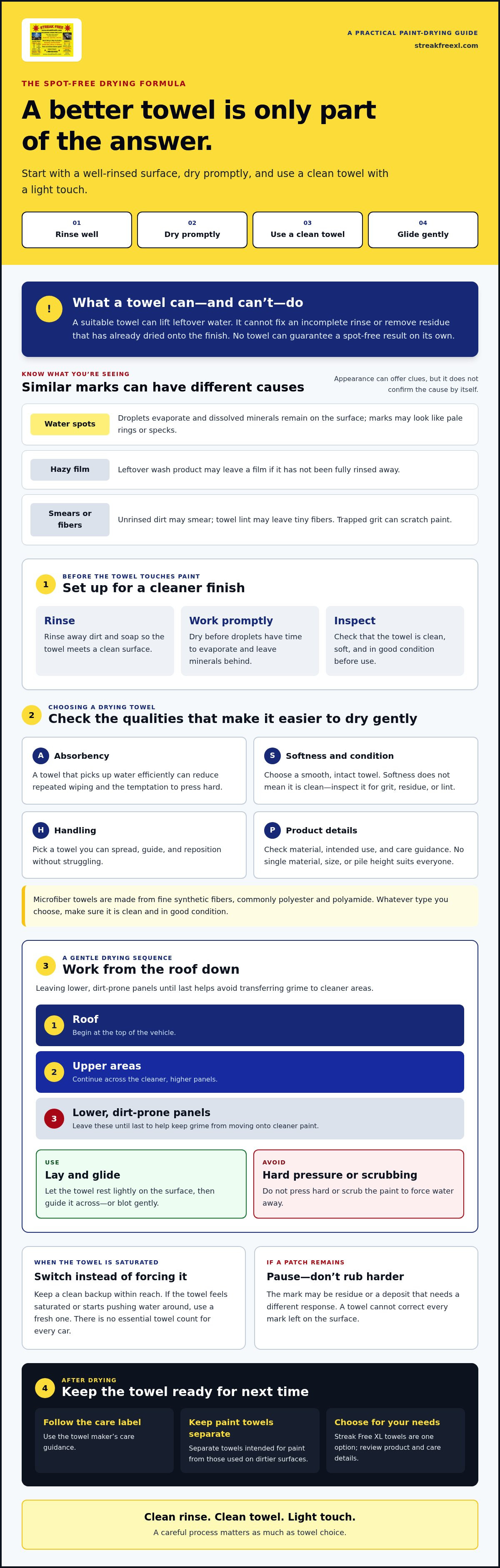
Keep towel contact light and controlled. Let the fabric pick up water rather than scrubbing the paint dry. Work from cleaner, higher panels toward lower areas, where road grime is more likely to collect.
- Start at the roof. Lay the towel flat over a section, then gently glide it across the surface in a straight, controlled pass. Avoid pressing down or scrubbing back and forth.
- Move to the glass and upper panels. Dry the windshield and windows, then the hood and trunk. Turn or refold the towel to expose a clean, dry area as it gathers moisture.
- Continue down the doors and sides. Use smooth passes, repositioning the towel rather than dragging a wet, overloaded section across several panels.
- Finish with lower panels. Dry these last because they’re more likely to have picked up dirt. If you see grit or debris on the towel, stop and switch to a clean one.
- Check for leftover droplets. Look around seams and edges for water that may run out after the main panels are dry. Blot small remaining drops with a clean part of the towel.
What is the safest way to move a drying towel over paint?
Use gentle contact, not force. Lay the towel against the surface and guide it with a light glide. For a small area or a stubborn droplet, blot gently instead of rubbing harder. If the towel picks up visible dirt, don’t keep using that side on the paint. Set it aside and take a clean towel.
How should you dry mirrors, glass, and tight areas?
Use a clean section of the towel for glass, especially after drying body panels, to limit transferring residue. Around mirrors, trim, and badges, blot or make careful, short wipes rather than pushing fabric into tight gaps. Check panel edges and crevices before you finish. Water can collect there and run back onto a dry surface.
A calm sequence works better than extra pressure. Follow the roof-to-bottom order, keep turning to a clean towel area, and pause if the fabric becomes dirty or too damp to pick up water well. Explore Streak Free XL towels as an option to consider for your car-drying routine.
Keep Your Drying Towel Clean and Choose Your Next Step
A drying towel can’t work well if it collects dirt or residue between washes. Grit trapped in the fabric can transfer to paint, while unsuitable washing or poor storage may affect the towel’s performance. Keep care simple: follow the instructions for that specific towel, then store it clean and dry.
How do you wash and store a car-drying towel?
Check the towel maker’s care label before laundering. Instructions can vary, so don’t assume that washing advice for one towel applies to another. Once clean and fully dry according to its care directions, store it somewhere protected from dust, grit, and vehicle-care residue. Keep it separate from cloths used on wheels or other dirty areas.
Before your next wash, inspect the towel. Look for visible debris, residue, or damage, and use a clean alternative if anything seems off. This quick check helps you choose the best towel to dry car without spots for the job, rather than relying on one that may carry grime back onto the finish.
What if spots remain after drying?
Don’t immediately scrub harder. First, consider what you’re seeing: leftover soap can leave a hazy film, minerals may remain after droplets evaporate, and water can trickle from mirrors, trim, or panel gaps after you’ve dried the surface. Recheck those areas. If you notice residue during the wash, rinse again and dry gently.
If marks persist or look etched into the finish, avoid repeated rubbing and seek guidance from a reliable paint-care resource. The mark may need attention beyond ordinary drying, and its appearance alone may not reveal the cause. A careful check is better than adding more friction to the surface.
Quick finish checklist:
- Rinse thoroughly before drying.
- Work in shade when practical.
- Use a clean towel and dry with a light touch.
- Inspect panel edges and the finish for remaining water or marks.
For a clean, repeatable routine, pair good towel care with a calm final check. If you’re considering a towel for your setup, see Streak Free XL towels and review the available product details to decide what suits your needs.
Make Your Next Drying Routine Count
A clean finish starts before the towel touches the paint. Rinse away dirt and soap, choose a clean, absorbent towel that’s easy to handle, then work gently from the roof downward. Shade can give you more time, while careful passes and a final check help catch water around mirrors, trim, and panel edges.
The best towel to dry car without spots works as part of a routine, not as a shortcut. Keep it clean, follow its care label, and switch to a fresh towel if it picks up grit or becomes too damp. These habits make drying more controlled and help you avoid unnecessary rubbing.
Streak Free XL offers Streakfree towels as part of its range of cleaning textiles and tools. Review the product details to see whether they suit your needs, then explore Streak Free XL towels.
Use a gentle touch and a steady sequence. You’ve got a practical plan for your next wash.
Frequently Asked Questions
What is the best towel to dry a car without spots?
The best towel to dry a car without spots is clean, absorbent, soft, and easy to handle across the paint. Check the product details for intended use and care instructions, and avoid towels that are dirty, damaged, or carrying grit. Towel choice works alongside a thorough rinse and gentle drying technique. Streakfree towels are one option from Streak Free XL; check the product information to see if a particular towel suits your needs.
How do you dry a car without leaving water spots?
Rinse the car thoroughly, then dry it promptly with a clean towel using light, controlled passes. Start at the roof and work downward, saving dirt-prone lower panels for last. Turn the towel to a clean area as it picks up water, and blot droplets around mirrors, trim, and panel edges. Avoid scrubbing or pressing hard. A careful rinse and steady drying sequence help reduce leftover water and residue.
Can microfiber towels scratch car paint?
A clean, suitable microfiber towel used gently is intended to dry surfaces without rough scrubbing, but no towel should be treated as automatically scratch-proof. Grit caught in the fabric, a damaged towel, or forceful rubbing can mark paint. Inspect the towel before use and stop if you see debris on it. Keep it away from dirty wheels and the ground, and switch to a clean towel if it becomes contaminated.
Why does my car have water spots after drying?
Water spots can appear when droplets evaporate and leave dissolved minerals behind. Other marks may have different causes, including leftover soap, dirt smears, towel lint, or water that runs out of mirrors and panel gaps after drying. Look closely before rubbing the surface again. If residue remains during washing, rinse the area thoroughly and dry it gently. Persistent marks may need further paint-care guidance.
Should I dry my car in the sun or in the shade?
Shade is usually easier when available because direct sun and warm panels can speed up evaporation. That gives you less time to dry each area before droplets disappear and residue is left behind. Shade alone won’t prevent spots, so rinse thoroughly and dry promptly. If you can’t find shade, work in manageable sections and keep your clean towel ready rather than leaving water to sit.
How many towels do you need to dry a car?
There’s no set towel count that’s essential for every car. The number you need depends on the vehicle’s size and how quickly your towel becomes damp. Keep a clean backup nearby, especially for a larger vehicle. If the towel feels saturated or starts spreading water instead of picking it up, switch to the backup rather than pressing harder or continuing with a dirty towel.
How should I wash a car-drying towel?
Follow the care instructions supplied with the specific towel before laundering it. Washing recommendations can differ, so don’t assume settings or products are suitable without checking the label. After care, store the towel clean and dry, away from dust, grit, and cloths used on dirtier areas. Before using it on paint again, inspect it for visible debris, residue, or damage, and choose a clean alternative if needed.